The biggest banks are starting to move conventional bank money to the blockchain, creating a potential competitor to the USDT and USDC stablecoins. In Great Britain, Barclays, HSBC UK, Lloyds Banking Group, Monzo, Nationwide, NatWest and Santander are already testing tokenized deposits, while the American Citi is simultaneously building the infrastructure that allows corporate clients to work with stablecoins through Coinbase.
In fact, two models of future digital money are taking shape. The first involves the use of independent stablecoins issued by companies such as Tether and Circle. The second transfers existing money in bank accounts to the blockchain.
British banks took an important step in this direction on September 24, 2026. Industry association UK Finance has announced the completion of the first real customer transactions with tokenized deposits in pounds sterling as part of the Great British Tokenised Deposit, or GBTD, project.
Barclays, HSBC UK, Lloyds Banking Group, Monzo, Nationwide, NatWest and Santander are participating in the project.
The banks have completed two real mortgage refinancing operations. Tokenized funds were automatically blocked until the terms of the agreement were met, after which payment was made without additional manual operations.
Another test was related to a purchase on a consumer marketplace. It demonstrated the possibility of moving tokenized bank funds between customers of different banks through a common infrastructure.
The main difference of this model from USDT or USDC is the legal nature of money.
Tokenized deposit is not a separate cryptocurrency. It is a digital representation of ordinary money that a customer already holds in a bank account.
If there is 1,000 GBP in a bank account, the bank can theoretically represent this amount in the digital infrastructure as a corresponding amount of tokenized pounds. At the same time, the bank continues to bear the obligation to the client, and the funds themselves retain the legal status of a bank deposit.
Stablecoin works differently.
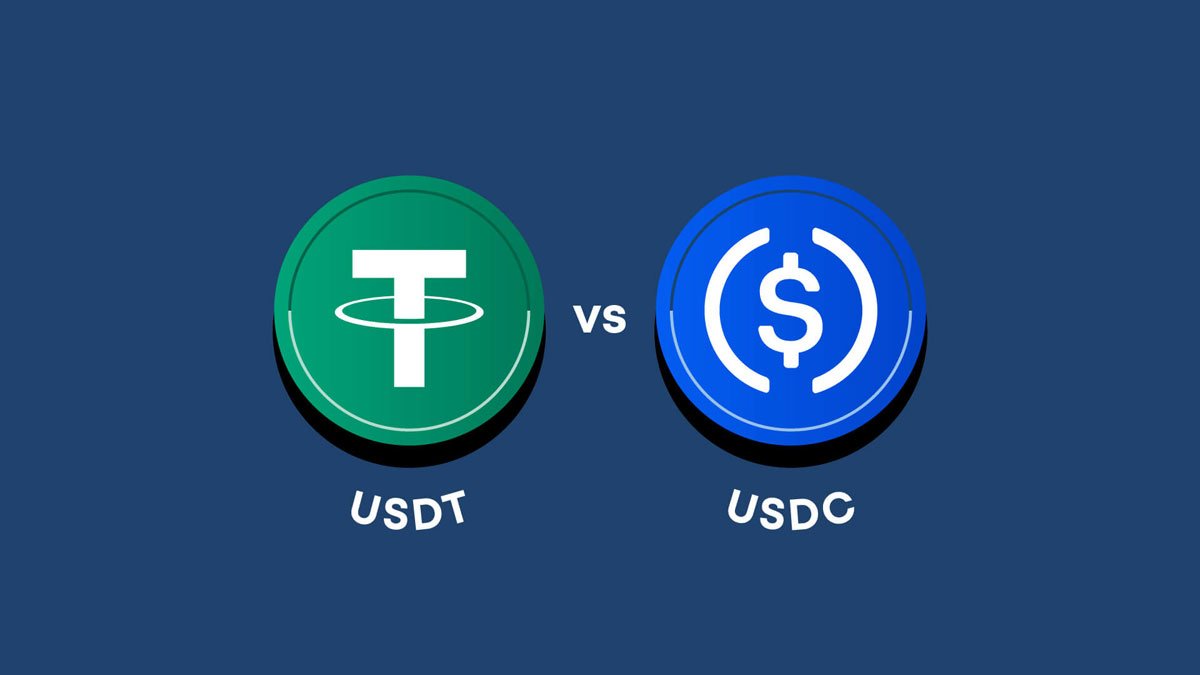
USDT issues Tether, USDC — Circle. The user actually exchanges ordinary money for a digital token, the value of which the issuer undertakes to maintain at the level of the corresponding fiat currency at the expense of reserve assets.
Therefore, a tokenized bank deposit and a stablecoin may look the same in the blockchain, but economically they are different instruments.
Banks have a significant advantage - the existing system of trust, regulation and customer relations.
UK Finance clearly states that tokenized deposits must retain the regulatory guarantees of conventional bank deposits, while acquiring the properties of digital money — programmability, faster settlements, and the ability to automatically make payments after meeting certain conditions.
Programmability itself can become one of the main advantages of the technology.
For example, money during the purchase of real estate can be automatically transferred to the seller only after the registration of the transaction is completed. Payment to the supplier can be made after confirming the delivery of the goods. In financial transactions, the transfer of a security and payment for it can occur almost simultaneously.
As a result, the number of intermediate transactions and the risk that one party will fulfill its obligations and the other will not be reduced.
The next stage of the British project will be the use of tokenized deposits for payments for digital assets. GBTD participants plan to link the tokenized money of customers with digital securities.
In this way, banks are trying to create within the regulated financial system the opportunities that blockchain and stablecoins initially offered outside of it.
However, it is still too early to write off USDT and USDC accounts.
The scale of the already existing stablecoin market cannot be compared to banking experiments. According to CoinGecko on October 3, the capitalization of USDT alone is about $184 billion, and USDC is about $74 billion.
The total stablecoin market already exceeds $300 billion.
Stablecoins are especially strong in international transfers. They operate 24/7, can move between different blockchains and platforms, and do not require the sender and receiver to be served by the same bank.
This is where the fundamental problem for the traditional banking system arises.
If a large part of international payments moves to USDT, USDC or other stablecoins, banks will have to compete for payment flows that previously passed almost entirely through the banking infrastructure.
In addition, the mass transfer of funds from bank deposits to stablecoins could potentially reduce the bank deposit base used to lend to the economy.
The Bank of England is directly considering this risk when developing new digital money regulation.
In June 2026, the British central bank published draft rules for systemic stablecoins. The regulator has proposed a model in which at least 40% of the system's stablecoin reserves must be held directly at the Bank of England, and up to 60% can be placed in short-term British government bonds.
Limits on the amount of stablecoins that individual users and companies can hold are also being considered for the transition period.
However, the Bank of England is not proposing to ban stablecoins. On the contrary, his strategy assumes the existence of several types of digital money at once.
In the future, ordinary bank deposits, their tokenized versions, regulated stablecoins and a potential digital pound of the central bank can be used simultaneously.
Therefore, the real competition is developing not so much between banks and cryptocurrencies, but between different models of digital money.
Citi's strategy is indicative in this regard.
On September 28, Citi and Coinbase announced the expansion of cooperation, which actually combines the traditional banking infrastructure with stablecoins.
Coinbase chose Citi's Virtual Account Wallet to run Coinbase Virtual Accounts. Incoming traditional money can be automatically converted into stablecoins.
In the opposite direction, Citi corporate clients will be able to accept payments in stablecoins through the Spring by Citi payment platform and the Coinbase Payments infrastructure.
Coinbase accepts the digital payment and ensures its conversion, after which Citi settles in traditional currency as a bank.
For the corporate client, this is especially important: the company gets the ability to accept stablecoins without creating an infrastructure for storing and managing cryptoassets on their own.
According to Citi, this solution potentially opens its corporate clients to access to more than 150 million stablecoin owners around the world.
In this way, large banks choose different strategies.
British Barclays, HSBC, Lloyds, NatWest and other banks are creating a tokenized version of their own deposit funds.
Citi is simultaneously developing a banking blockchain infrastructure and builds a bridge between traditional money and already existing stablecoins.
In the long run, these models may not displace each other, but divide the market.
Tokenized deposits have a natural advantage within the banking system — for salary payments, corporate settlements, mortgages, lending and securities operations.
Stablecoins are stronger where 24/7 is especially important cross-border transfers, interoperability between different platforms and the ability to freely move digital money between blockchains.
But for banks, this issue becomes strategic. If they do not transfer deposits and payments to programmable digital infrastructure, a significant part of the new market may go to Tether, Circle, Coinbase and other companies of the crypto industry.
This is why the competition between USDT, USDC and tokenized bank deposits may become one of the key areas of development of the global financial system in the coming years.
Sources: UK Finance, Bank of England, Citi, Coinbase, CoinGecko.