The European Union recognized basalt as a material of the 21st century, realizing the huge list of various applications of basalt fibers (BV). From applications of basalt in the defense-industrial complex to almost most areas of construction.
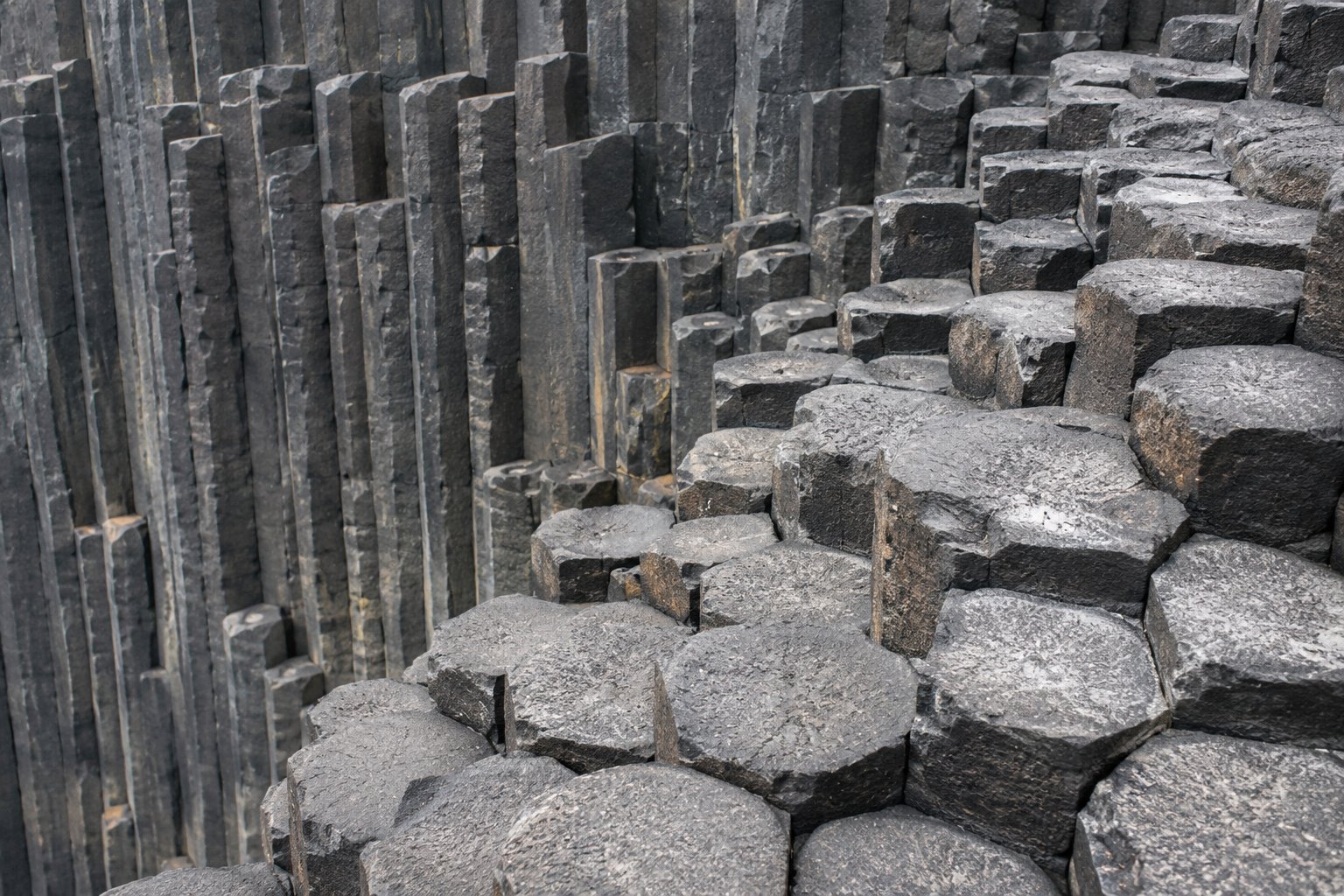
Basalt rocks belong to minerals that are a strategic reserve of the country, lying underfoot and almost not used in Ukraine. Basalt is the most common rock in the earth's crust. This is magma that poured out of volcanoes. Basalt deposits are found in almost all countries, their reserves are huge. But few countries in the world have sophisticated technologies for the production of basalt products.
Basalt as a stone has been known for a long time, but the production of basalt fiber from it was proposed by Paul De, who received a US patent for the invention in 1923. There were no people interested in the invention at that time. But in the 60s of the 20th century, he was remembered and active development in this field began. Under the veil of secrecy, the USA and the USSR began to investigate the properties and possibilities of using BV, of course, for the purposes of the defense industry (OP), which belongs to the category of high-tech industries. The USSR development center was located in Kyiv at the Institute of Materials Science Problems of the National Academy of Sciences of Ukraine. According to the results of their research, the first industrial samples of BV were obtained, and in the mid-80s, the technology of BV production was worked out and the first industrial production was launched, technical conditions were developed for rocks as a single-component raw material for the production of BV. In the 80s, about 30 basalt-oriented enterprises were created and operated in Ukraine.
Now there are only four units, for insulation. A factory was even built in Vietnam. Specialists of the institute studied and summarized the mineral and raw material base of rocks of Ukraine for the production of BV, which is unlimited for the production of various BV. Studies of the mineral resource base of Transcarpathian, Rivne, Donetsk, Dnipropetrovsk, Zaporizhzhya, Cherkasy, Poltava, Kirovohrad, Vinnytsia regions and Crimea have shown the presence of various rocks on the territory of Ukraine. These are andesites, andesitobasalts, basalts, dayerites, diabases, basalt and diabase porphyrites, gabbros, amphibolites and crystalline schists, which can be used for the production of various types of fibers. Transcarpathia has the largest number of deposits. They are represented by andesites and andesitobasalts. Basalts of explored deposits of the Rivne region, forming mainly medium-viscosity melts, are suitable for obtaining coarse, staple superfine and thin fibers. Previously, basalts from the Berestovets and Ivanovo-Dolinsky deposits of the Rivne region were mainly used.
BV production technology is based on the use of single-component raw materials - rocks, which significantly simplifies the technological process. Basalt is mined in quarries using explosive methods, after which it is crushed into the necessary fractions. Next, melting and production of BV is carried out. The existing technologies for the production of BV are perfect. Melting of raw materials at temperatures of 1400-1500°C is carried out in induction-type crucible furnaces, crucibles are placed in solenoids, and circular heating is carried out for the homogeneity of the melt and saving energy. The furnace is designed for 10 years of trouble-free operation. This makes production economical. Only 0.8 kW/h is spent on the production of 1 kg of BV. electricity. The main, complex, expensive and relatively short-lived element of production are platinum-rhodium or platinum dies with a cost of up to 700,000 E, which can withstand temperatures up to 1500° C. But there are already scientific developments on the manufacture of dies from other graphite-based materials, and in the near future platinum-rhodium and platinum dies will be replaced by cheaper and durable.
Since the 70s of the last century, BVs, thanks to their unique characteristics, have been widely used, namely: strength, chemical resistance to the effects of acids and especially alkalis, thermal resistance, non-flammability, vibration resistance, wear resistance, resistance to sudden temperature changes. BV are widely used for heat and sound insulation, for the production of fire-resistant materials and the provision of fire-fighting systems, filters, production of technical fabrics and non-woven materials, reinforcement, composite materials and products. Basalt staple short fibers are used for the production of heat-insulating mats and plates, materials for filters of gaseous emissions with elevated temperature and chemical active liquid media, for hydroponics in agriculture. BV is used for the production of a wide range of materials and products: reinforcing materials for dispersed volume reinforcement of concrete and asphalt concrete, composite reinforcement, reinforcing bars, construction and road meshes and reinforcing tapes, technical fabrics of various weaves and densities, non-woven materials, composite materials and products - profiles, pipes of medium and large diameters, chemically resistant pipes, pipes for industrial and sewage systems, tanks, containers, and containers for storing aggressive liquids, high-pressure cylinders, supports and bridge decks, mine fastening systems, engineering products, parts of cars, sea and aircraft; electrical insulating materials and products for transformer substations.
The unique properties of BV have led to its widespread use in the construction industry, earthquake-resistant, hydrotechnical, coastal, road construction, highways and high-speed railways, utilities, mechanical engineering, automobile, aviation, shipbuilding, energy, and agriculture. Because composite basalt rebar is not prone to corrosion, is durable in operation in difficult conditions, weighs 5-8 times less than steel rebar, is 2.5 times stronger at breaking, has the same thermal expansion coefficient as concrete, moisture penetration does not delaminate concrete, is easily cut with ordinary tools, does not conduct electricity and does not create fields when exposed to radio frequency energy, which is excellent for hospital buildings or data centers. gives approximately 60% less CO2 emissions in precast concrete structures, due to optimization of the production process, logistics and materials. Fastening and knitting of reinforcement is carried out with plastic ties, roving BV, or knitting wire. The price of basalt-plastic reinforcement is lower than that of steel, with a number of other advantages. In addition, BV do not age and represent an almost "eternal" material, unlike metals that corrode.
All these unique qualities of basalt lead to a significant reduction in the cost of construction, increased durability, reduced geometric dimensions of buildings, and increased environmental friendliness. Already now, reinforcement is widely used to strengthen coastlines, piers, port facilities, bridges, tunnels, subways, sleepers.
Basalt fiber is used for: reinforcement of monolithic structures, structures; strengthening of roads; reinforcement of screeds; strengthening, stable and water-repelling structures; industrial floors. Basalt fiber, as a reinforcing fiber, is widely used when pouring the floor screed, significantly reducing its price. Previously, the screed was reinforced with a metal mesh, but now fiber is simply added to the cement mortar, which replaces the mesh and does not require knitting. Therefore, it is already recommended to use basalt fiber in construction. Next, we can expect the introduction of mandatory requirements for the use of fiber. Basalt fiber makes it possible to increase the shock load of industrial floors by 3-5 times. At the same time, all the requirements for their quality are met: high resistance to various types of loads (abrasive, dynamic, statistical, shock), resistance to the effects of chemicals, surface friction, etc. The use of basalt fiber increases the compressive strength by 20 percent, when bending - by 4-7 times. Frost resistance increases by 1.5-2 times, crack resistance increases. The use of fiber eliminates the appearance of shrinkage cracks. Resistance to dynamic loads increases up to 5 times. The fiber is used in a ratio of 1% per 1 ton of cement, which leads to an improvement in economy.
The use of road and reinforcing basalt grids leads to a decrease in material costs, an increase in the time between repairs, they have higher chemical properties, the laying of asphalt concrete with the help of a basalt grid can take place at any temperature, the preservation of its properties even at low temperatures, a decrease in the thickness of the asphalt concrete coating, an increase in the intervals between repairs terms from 10 to 15%. The service life of the coating also increases by 3-6 years.
Due to high strength, fire resistance, heat resistance above 1000° C, basalt fiber fabric is used for a long time at a temperature of 760° C. It is an ideal material for replacing harmful asbestos and fiberglass fabrics. Due to these parameters, different types of clothing are made from BV-based fabrics: fire-protective, heat-insulating, fire-resistant, protective for steelworkers, electric welding, work, fire-resistant.
The world's largest manufacturers, such as Airbus, Boing, BMW, GM, etc., today massively switch to the use of individual basalt composite products, because with the low cost of units and their lower weight, this adds wear resistance and load capacity. Basalt products can be widely used in the railway industry, in the manufacture of railway carriages, for strengthening and lightening, which will lead to significant savings in fuel and transportation of additional cargo. China plans to produce sea containers from basalt, which are 60% lighter, resistant to wear and corrosion. Many countries are strengthening their coastlines using basalt products and this is the beginning of a global transition to environmentally friendly, efficient and cost-effective basalt technologies.
Particular attention should be paid to the possibilities of using BW in OP. The production of projectile and missile shells from BVs, which are stronger and lighter than metal, will allow to increase their range with the same charge power. And for military missiles, airplanes, drones, ships, in addition to weight reduction, there are generally fantastic opportunities to become invisible due to the properties of basalt to not reflect waves in a wide frequency range: from hydroacoustic waves to radar frequencies. BV acts as a material that is able to provide reliable protection against projectiles, but will not lead to the weight of the armor, which is important, because it will not be necessary to modernize the chassis, develop new power units, and look for ways to increase speed and maneuverability. The main application of heat-resistant basalt composites is the rocket and aerospace industries. The University of California is actively working on the development of fiber-reinforced composites, the results of using BV as a filler for ceramic composites were published by the National Technology Center for Metals and Materials, which patented a composite for rocket engines back in 2011.
The EU launched projects for the wide introduction of composites in shipbuilding: RAMSSES, FIBRESHIP. Shipbuilders of the USA, India, Singapore and Italy pay attention to BV due to corrosion resistance, non-flammability, strength and lightness. The Dutch shipbuilders were ahead of everyone here. The Damen group of companies has been manufacturing composite vessels since the 1960s. Damen has now built a shipyard in Turkey, where vessels up to 25 m in length are built on the basis of BV. These are mostly interceptors. Damen plans to create composite ships of 45 and 75 m. For mine countermeasures vessels, it is important that the underwater magnetic trace is smaller than metal, which will help detect mines before they detect it, and soon it is expected to replace all mine countermeasures vessels of the Dutch Navy with composite ones. On-board equipment is also made of non-magnetic materials, which allows you to get close to mines without triggering them. The lighter weight of the composite superstructure leads to a decrease in the center of gravity of the vessel, reduces the risk of overturning of the vessel.
Using concrete from BV for runways of airfields increases their wear resistance and coefficient of adhesion with the wheels of the aircraft landing gear. Fire-fighting aerial bombs have already been created and are being used from BV for localizing fires and man-made accidents and disasters. Camouflage systems for equipment and personnel make it possible to reduce the range of capture by high-precision weapons by 9 times, significantly reduce visibility in the infrared and radar ranges.
The qualities of BV make it possible to make a unique container for storing ammunition (reliable, light, durable, fireproof) to replace expensive containers made of high-quality wood, which when stored in open areas short-lived.
In addition to the high efficiency of using materials from military equipment as part of military equipment, production is significantly cheaper.
If you look at the use of basalt by industry, it is difficult to find industries where basalt is not used. In mechanical engineering, these are composite, structural and reinforcing materials, thermal insulation, and equipment for thermal highways. In shipbuilding - composite and structural materials and products, heat and sound insulation of equipment, small shipbuilding - constructions of hulls, superstructures. In the aviation industry – composite and sound-insulating materials. In wagon building - composite, electrical insulating materials, heat and sound insulation, non-combustible composite materials. In the automotive industry – composite and heat-sound insulation materials, reinforcing material for the production of brake pads and discs, non-combustible composite materials, cord for automobile tires. In the chemical and petrochemical industry – chemically resistant pipes, protective coatings, non-combustible composite materials, filters for exhaust gas purification. In the energy industry, there are electrical insulating materials, composite materials, and conductors for high-voltage power lines. Thermal insulation of thermal equipment of steam boilers, turbines. Materials for nuclear energy - non-combustible thermal insulation and structural materials, anti-radiation protection. In the municipal economy - for waste water filters and treatment facilities. In cryogenic technology - thermal insulation materials for the production of liquefied gases, liquid oxygen, etc. In metallurgy - thermal insulation materials for thermal equipment, recuperators, pipelines, communications.
Filters for cleaning exhaust gases at mining and metallurgical plants, filters for wastewater treatment, anti-corrosion coatings of sheet metal and rolled steel. In hydrotechnical construction - reinforcing materials for building dams, materials for land irrigation. In the construction of port facilities, marine platforms - reinforcing and structural materials from basalt plastics, anti-corrosion, protective coatings. In the production of building materials: building structural and facing plastics; reinforcing meshes; basalt plastic reinforcement for the construction of bridges, tunnels, railway sleepers, metro. Refractory materials are hard-burning and non-combustible materials. The use of such materials is especially relevant in the construction of responsible industrial facilities with increased fire safety: nuclear power plants, chemical and petrochemical industries, high-rise buildings.
The problem in the conditions of shortage of energy resources and their high cost in all northern countries is insulation. In Ukraine, housing and communal services consume up to 20% of all energy resources. In a year, Ukrainian high-rise buildings consume from 400 to 550 kW/h (per 1 m²/year), individual houses - from 600 to 800 kW/h (per 1 m²/year). In Germany, private houses consume on average about 250 kWh (per 1 m²/year), and in Sweden - 135 kWh (per 1 m²/year). And this is in the conditions of our warmer climate. Energy losses are directly correlated with the state of insulation. Consumption of insulation in different countries of the world is: Sweden – 60 kg/person, USA – 50 kg/person, Finland, Japan – 40 kg/person, Russia – 14 kg/person, Ukraine – 9.0 kg/person. That is, among the countries where insulation is necessary, Ukraine occupies the last place. The use of almost eternal basalt insulation completely solves the problem of insulation, replacing polystyrene foam, foam plastics and glass wool, as short-lived heat insulators with harmful phenolic compounds, which emit poisonous vapors at the slightest heating.
Today, the market demand for basalt products is many times greater than the volume of its production. The issue of widespread use of BV is determined by two main factors: the characteristics of BV, materials based on them and cost indicators - the cost of production and the price of BV. If we consider the global market of heat-insulating materials only, then it is huge. In 2022, it amounted to 28.75 billion dollars. and the market is expected to grow 1.7 times over 10 years. Up to almost 50 billion dollars. The Ukrainian market of thermal insulation materials, along with the markets of European countries, is one of the most dynamically and intensively growing, and the recovery of the country will take place on the basis of the use of new environmentally friendly materials.
The geographical distribution of the world market for the consumption of thermal insulation materials looks like this: Europe - 32%, followed by North America and the Asia-Pacific region. In terms of consumption not only of thermal insulation, but also of BV and products from them, the largest world consumer is the USA - 44%, followed by Europe - 26%, Asia - 24%, the countries of the American continent - 3.4%, Russia - 1.4%, other CIS countries - 1.2%. In Europe, the main consumers of BV are Germany and Austria - more than 30%, Italy - more than 20%, France - about 18%.
If we consider the 10 largest world producers of BV, then 4 are in China, 2 each in the USA and Europe. Today, the demand for BW is in the million tons per year, and the existing enterprises satisfy the demand by only a few %.
Analysis of the geography of consumption and production of BW shows good prospects for the development of the industry in Ukraine, because in addition to large volumes of own high-quality raw materials and technologies, inexpensive, light and sometimes bulky basalt products are expensive to transport over long distances.
Basalt is not only an environmentally friendly material of the 21st century with great application possibilities, but also a competitive industry of new materials with steady and rapid development in the world and a market with a low competitive environment. Those countries that will be the first to start its mass production will have great competitive advantages.
The serious advantages of basalt include the extreme ease of disposal by remelting and the possibility of using it again as raw materials and the possibility of localization of production within the country - starting with the extraction of raw materials, processing, and the production of finished products, which ensures production in conditions of an unstable economic situation, or even war.
In general, in the near future we can expect "basalt boom" with the massive use of BV and the complete replacement of many structures with basalt-based ones.
Ukraine has everything necessary for the development of the basalt industry. Both scientific developments and the world priority of creating non-ferrous materials, products from them and industrial implementation of technologies and equipment, many deposits of basalt, but do not use this advantage at all. Regular studies of the prospects for the use of basalt and possible technologies are not conducted. That is, Ukraine has lost its competitive advantages.
Establishment of an industrial vehicle production industry in Ukraine will allow solving a number of problems: effective use of its natural resources; to create high-tech production of various materials for OP, construction, energy, mining industry, gas industry, communal economy; reduce Ukraine's dependence on the import of similar materials and increase the country's export potential due to high-tech materials with high added value; renew its position among the world's BM manufacturers.
Now the country simply needs to create a high-tech, highly profitable modern industry for the production of basalt materials, basalt composites and products from them.
Volodymyr KHAUSTOV, Scientific Secretary of the State Institution
"Institute of Economics and Forecasting of the National Academy of Sciences of Ukraine", Honored Economist of Ukraine