Sweet sodas, energy drinks, fruit drinks, and other foods with added sugar remain one of the dietary habits that nutritionists first recommend giving up or significantly reducing, writes Business Insider with reference to surveyed doctors, nutritionists, and researchers.
Despite differences in views on the optimal diet, almost all of the experts surveyed by Business Insider called reducing the use of sweetened beverages one of the easiest ways to improve nutrition.
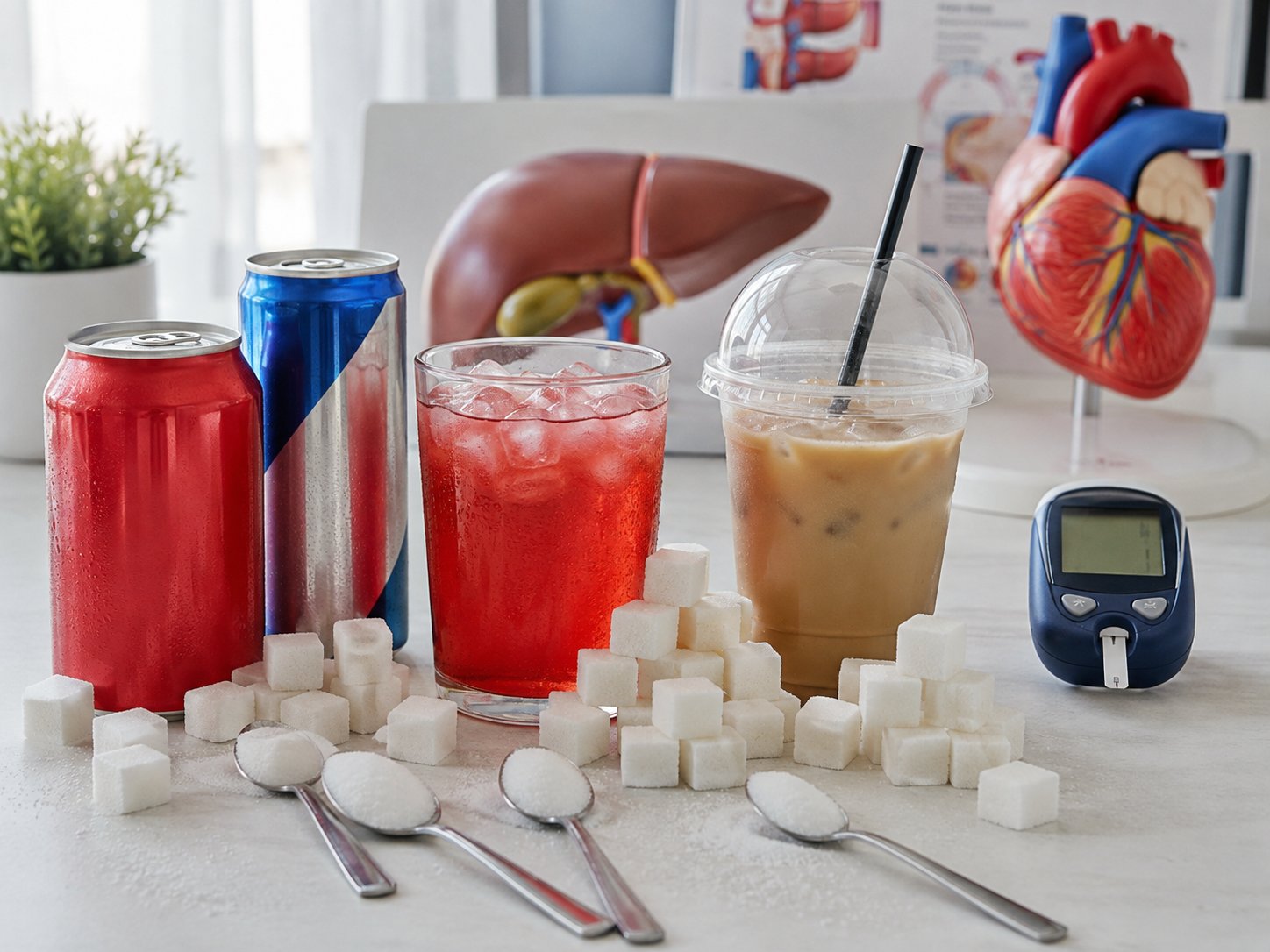
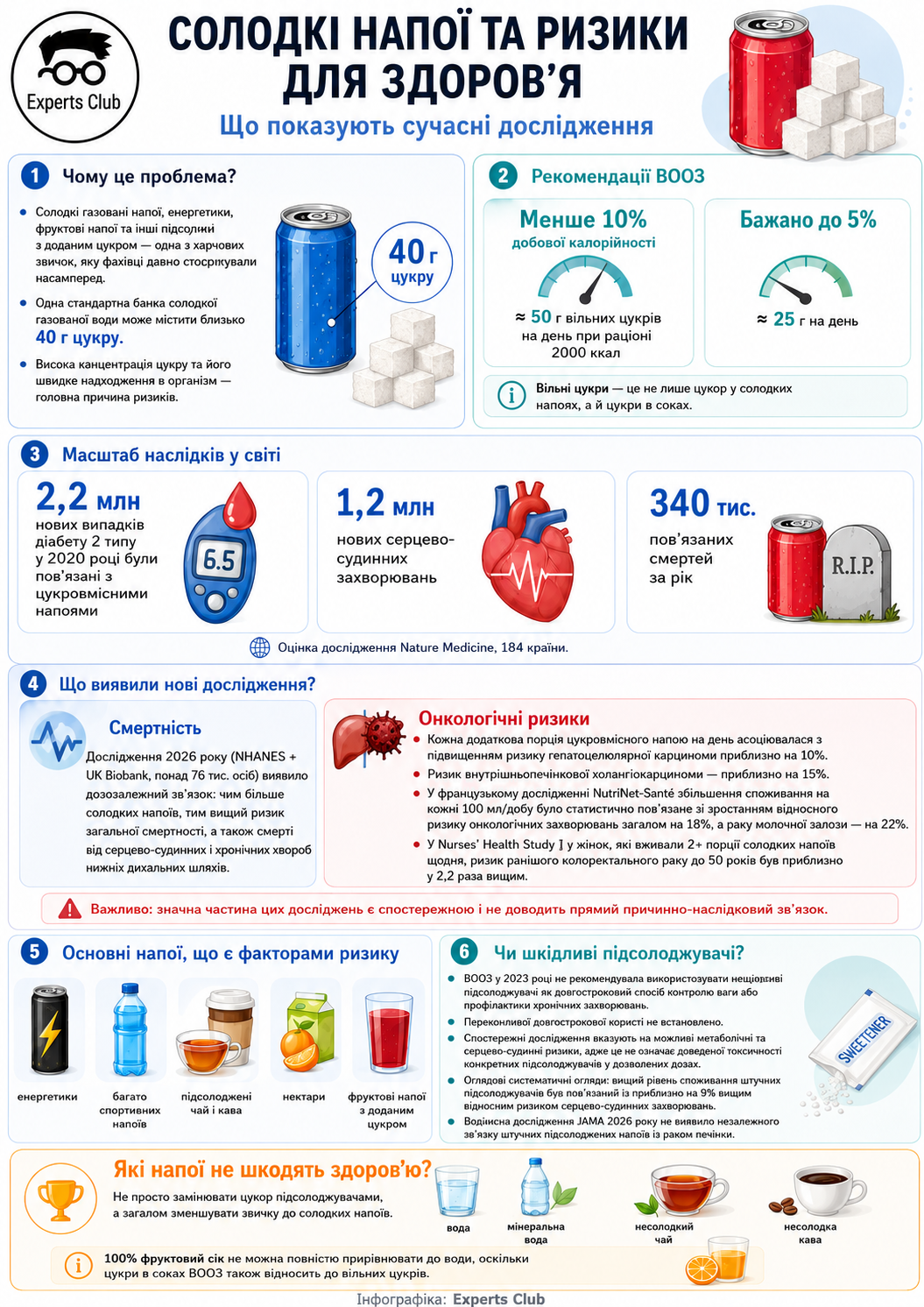
The main problem with such drinks is the high concentration of sugar and its rapid entry into the body. One standard can of sweet soda can contain about 40 g of sugar. The World Health Organization recommends limiting free sugars to less than 10% of daily caloric intake — approximately 50 g per day for a 2,000-kcal diet, and reducing their consumption to 5%, or approximately 25 g per day, can provide an additional health benefit.
The scale of potential consequences is confirmed by large epidemiological studies. The work, published in Nature Medicine in January 2025 and covering data from 184 countries, estimated that consumption of sugary drinks was linked to approximately 2.2 million new cases of type 2 diabetes and 1.2 million new cases of cardiovascular disease worldwide in 2020. This corresponds to almost one in ten new cases of type 2 diabetes and about one in thirty new cases of cardiovascular disease. The authors also estimated the mortality associated with such drinks at approximately 340,000 cases per year.
Another study, published on June 21, 2026 in the journal Diabetology & Metabolic Syndrome, based on the American NHANES and the British UK Biobank, found a pronounced dose-dependent relationship: the higher the consumption of sugary drinks, the higher the risk of total mortality, as well as death from cardiovascular and chronic diseases of the lower respiratory tract. The authors analyzed data from more than 76,000 people and additionally used estimates of the Global Burden of Disease.
More and more data is also appearing on cancer diseases, although here scientists emphasize that a large part of the studies remains observational and does not prove a causal relationship by itself.
In June 2026, JAMA Network Open published a combined analysis of 11 large prospective studies with 1.52 million participants Each additional serving of a sugary drink per day was associated with an approximately 10% increased risk of hepatocellular carcinoma and a 15% increased risk of intrahepatic cholangiocarcinoma. A total of 2,811 cases of liver cancer were detected during follow-up.
An earlier French NutriNet-Santé study published in the BMJ involved more than 101,000 adults. For every 100 ml per day increase in sugary drink consumption, the relative risk of cancer overall was statistically associated with an 18% increase, and a 22% increase in breast cancer risk. The authors separately emphasized that the study is observational and the results must be confirmed by other large studies.
A separate study, Nurses' Health Study II, found an association with early colorectal cancer in women. In participants who consumed two or more servings of sugary drinks daily, the relative risk of the disease by age 50 was approximately 2.2 times higher than in women who consumed less than one serving per week. At the same time, the study recorded only 109 such cases, so its results also require careful interpretation.
The problem is not limited to ordinary carbonated water. Sugar-containing drinks also include energy drinks, many sports drinks, sweetened tea and coffee, nectars and fruit drinks with added sugar.
At the same time, scientists do not consider switching exclusively to drinks with artificial sweeteners to be a universal solution either. The WHO in 2023 recommended against the use of non-sugar sweeteners as a long-term method of weight control or prevention of chronic diseases, because no convincing long-term benefit has been established and observational studies indicate possible metabolic and cardiovascular risks. At the same time, the WHO separately emphasizes that these data do not mean the proven toxicity of specific sweeteners in permitted doses.
For example, a study of more than 103,000 participants in the French NutriNet-Santé cohort found a connection between a higher consumption of artificial sweeteners and an approximately 9% higher relative risk of cardiovascular diseases, but the authors also noted the observational nature of the results. At the same time, a 2026 JAMA study did not find an independent link between artificially sweetened beverages and liver cancer.
Therefore, the most consistent recommendation combining research findings and the WHO position is not simply to replace sugar with sweeteners, but to reduce the general habit of sweetened beverages. As the main drinks, experts recommend water and mineral water, as well as unsweetened tea and coffee.
At the same time, 100 percent fruit juice cannot be completely equated with water: WHO classifies the sugars contained in juices as free sugars, the consumption of which is also recommended to be limited.