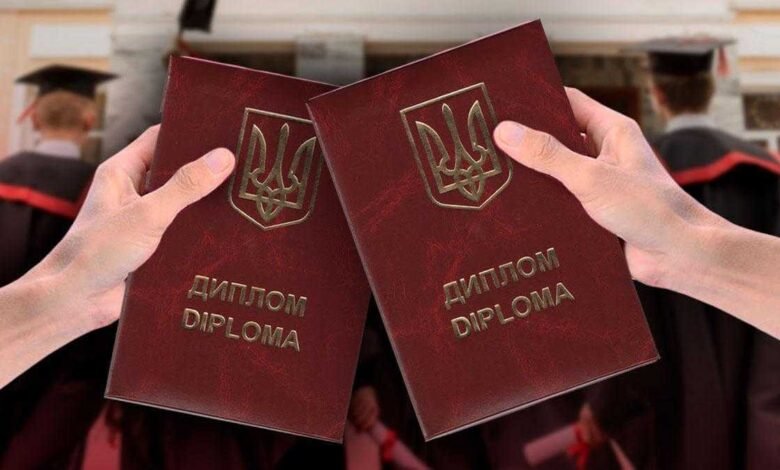
The European Commission proposed new rules for the recognition of professional qualifications, which should significantly simplify employment in the EU for specialists with diplomas obtained outside the European Union, in particular in Ukraine.
The changes are part of the Fair Labor Mobility Package presented on September 15, 2026, aimed at increasing the mobility of workers and reducing the shortage of qualified personnel in EU countries.
One of the key innovations should be the introduction of uniform rules for citizens of third countries and citizens of the EU who received professional qualifications outside the European Union. Currently, such specialists have to go through procedures in accordance with the national rules of a specific EU country.
The European Commission proposes to establish clear deadlines for document consideration, digitize procedures and create a single European access point available in all EU languages. New and recently obtained qualifications are planned to be issued in a standardized digital format with the possibility of storing them in the European Digital Identity Wallet.
A separate free Europass tool will allow employers to compare qualifications obtained in different countries.
The proposed directive on the recognition of qualifications of citizens of third countries may be of particular importance to Ukrainians. It should make the procedures for such specialists faster and clearer, regardless of where the qualification was obtained.
For seven regulated professions, for which the EU already has common minimum training standards, the possibility of automatic recognition of diplomas issued by educational institutions outside the EU is proposed, if these institutions pass an inspection by European quality assurance bodies.
These are the professions of doctor, nurse, dentist, midwife, pharmacist, veterinarian and architect.
At the same time, automatic recognition will not apply to any foreign diploma: the educational program and the institution must meet the established European requirements.
The European Commission also plans to shorten the terms of professional recognition. Under the new system, the procedure should last no more than 11 weeks, and for automatic recognition of regulated professions - up to five weeks.
At the same time, the simplified recognition of a diploma in itself will not grant the right to enter or reside in the EU. Member states will retain control over immigration rules and requirements for the admission of foreigners to professional activities.
The package also provides for the creation of the European Social Security Pass, the strengthening of the European Labor Administration and the wider use of digital documents when moving workers between EU countries.
According to the European Commission, after full implementation, the reform could provide about €5 billion in economic effect by 2040 thanks to speeding up procedures, reducing administrative costs and fighting fraud.
The proposals still have to go through the EU legislative procedure. Simplified recognition of qualifications obtained outside the European Union is planned to be implemented within two years after the adoption of the relevant acts, and digital qualifications and simplification of procedures for regulated professions - within three years.
For Ukraine, the changes are potentially of particular importance due to the large number of Ukrainian citizens who currently live and work in EU countries. The difficulty of confirming education and professional qualifications remains one of the barriers to the employment of migrants in accordance with their specialty.