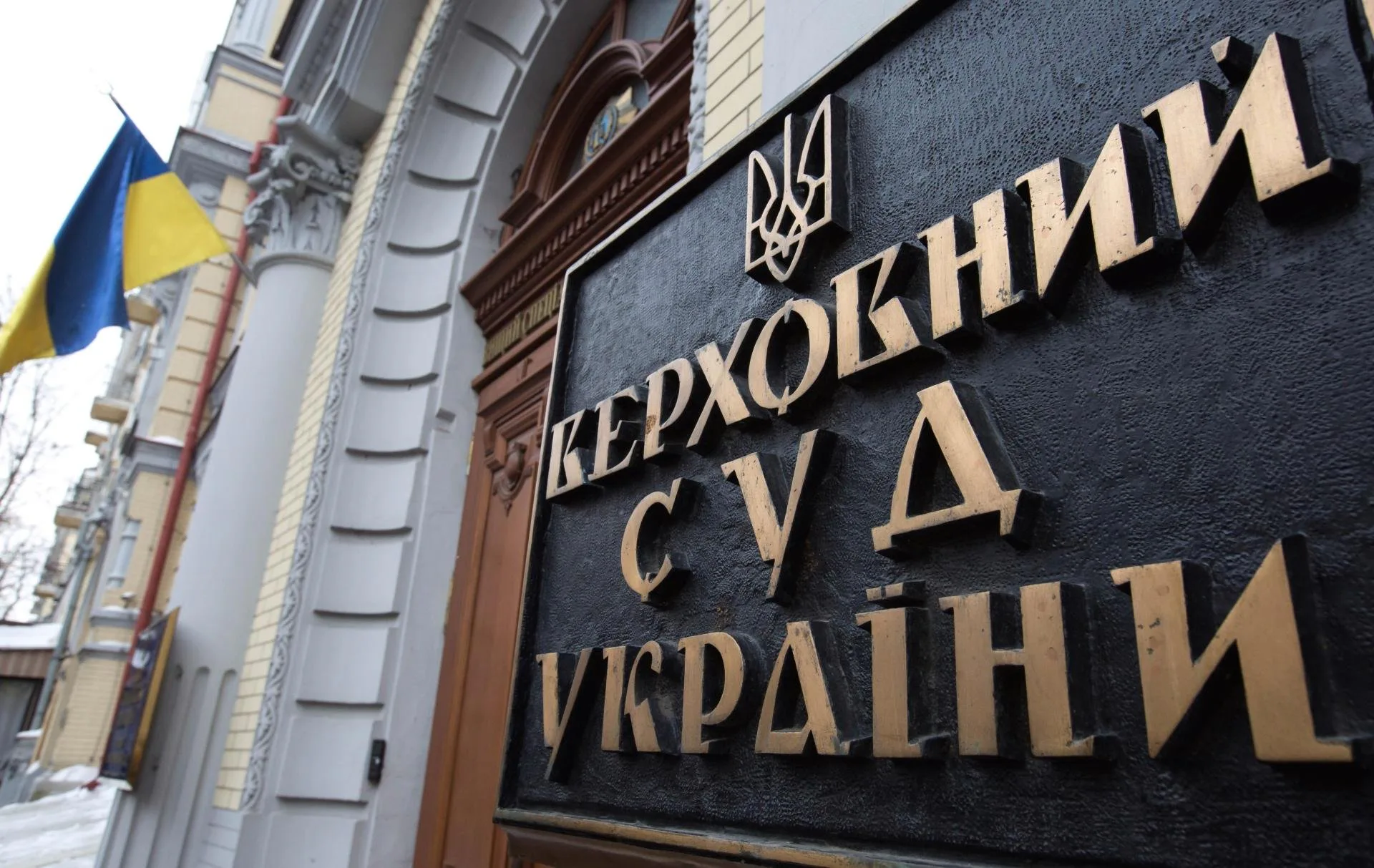
The absence of an effective out-of-court mechanism for resolving consumer credit debt contributes to a significant number of court cases between financial companies and borrowers. At the same time, it is the court procedure that allows for the verification of the justification of the accrued interest and the protection of consumers from excessive financial demands, believes Vasyl Krat, a judge of the Supreme Court of Ukraine.
As noted in a study by the analytical service “OpenDatabot,” published 28 October 2026, all ten of the country's largest corporate plaintiffs operate in the financial sector.
The leader of the rating is the company “Ukr Kredit Finans,” with 80 421 court cases opened on its claims for an incomplete 2026. In second place is “Spozhyvchyi Tsentr” with 68 076 cases.
Overall, among the hundred legal entities that most frequently turned to the court in 2026, 39 operate in the field of lending and other financial services.
Commenting on the results of the study, Krat noted that the current regulation of the collection of consumer credit debt limits the possibilities of using notarial execution writs and arbitration review.
As a result, creditors are forced to turn to state courts.
According to the judge, the problem is deepened by the financial consequences of the full-scale war. Loss of employment, income, and property forces part of the population to resort to accessible forms of short-term lending, including microloans.
In this case, the ability to quickly obtain a loan does not always correspond to the borrower's ability to fulfill the obligation on time.
A separate problem remains excessive interest rates.
The KRA reported that in one of the court cases, the actual annual interest rate on the loan was 1 139 966%.
Such an indicator, cited by the judge as an example of judicial practice, is not the current allowed rate for new consumer loans.
In Ukraine, since 20 August 2024, there has been a restriction on the maximum daily interest rate for consumer loans at the level of 1%.
The relevant standard was established by Law No. 3498-IX of 22 November 2023 with a gradual reduction of the allowed rate during the transition period.
As explained by the Supreme Court on 14 September 2026, for agreements concluded after the completion of the transition period, the condition regarding the daily rate that exceeds the legal maximum does not apply to the part of the excess.
However, the new restrictions do not automatically apply to agreements concluded before the relevant amendments come into force.
In particular, when considering disputes regarding old credit agreements, it is necessary to take into account the date of their conclusion, the possible extension of the credit period, and the conditions of the legislation that was in effect during the relevant period.
These issues were considered by the joint chamber of the Cassation Civil Court as part of the Supreme Court, in particular in the ruling of 7 September 2026 in case No. 552/672/23.
The court noted that under certain circumstances, excessive or ambiguously formulated terms of a credit agreement may be subject to judicial review with the application of consumer protection legislation.
At the same time, for certain methods of protection, it is necessary to present the relevant claims by the borrower, while ambiguous provisions of the agreement the court may interpret in favor of the consumer directly during the resolution of the dispute.
The problem has significant economic importance.
According to information from “Opendatabot” based on statistics from the National Bank of Ukraine, as of 1 July 2026, the total debt of the population to microfinance organizations reached 32.32 billion UAH.
Since the beginning of the year, this indicator has increased by 17%, or by 4.7 billion UAH.
In the first half of the year, Ukrainians concluded nearly 4.2 million agreements with microfinance organizations for a total amount of 37.5 billion UAH.
The growth of credit debt combined with the limitations of out-of-court enforcement creates additional pressure on the judicial system. At the same time, the available data do not allow us to determine what portion of new court cases is directly related to overdue microloans and how many of them concern the contesting of accrued interest.
The Supreme Court of Ukraine is the highest court in the country's judicial system. The Cassation Civil Court operates within it, which, among other things, considers disputes related to the performance of credit obligations and the protection of the rights of consumers of financial services.
Sources: «OpenDatabot», research from 28 October 2026; Supreme Court of Ukraine, clarification by Vasyl Krat from 14 September 2026; Supreme Court, materials from the National Judicial Forum from 20 October 2026; «OpenDatabot», microloan debt.