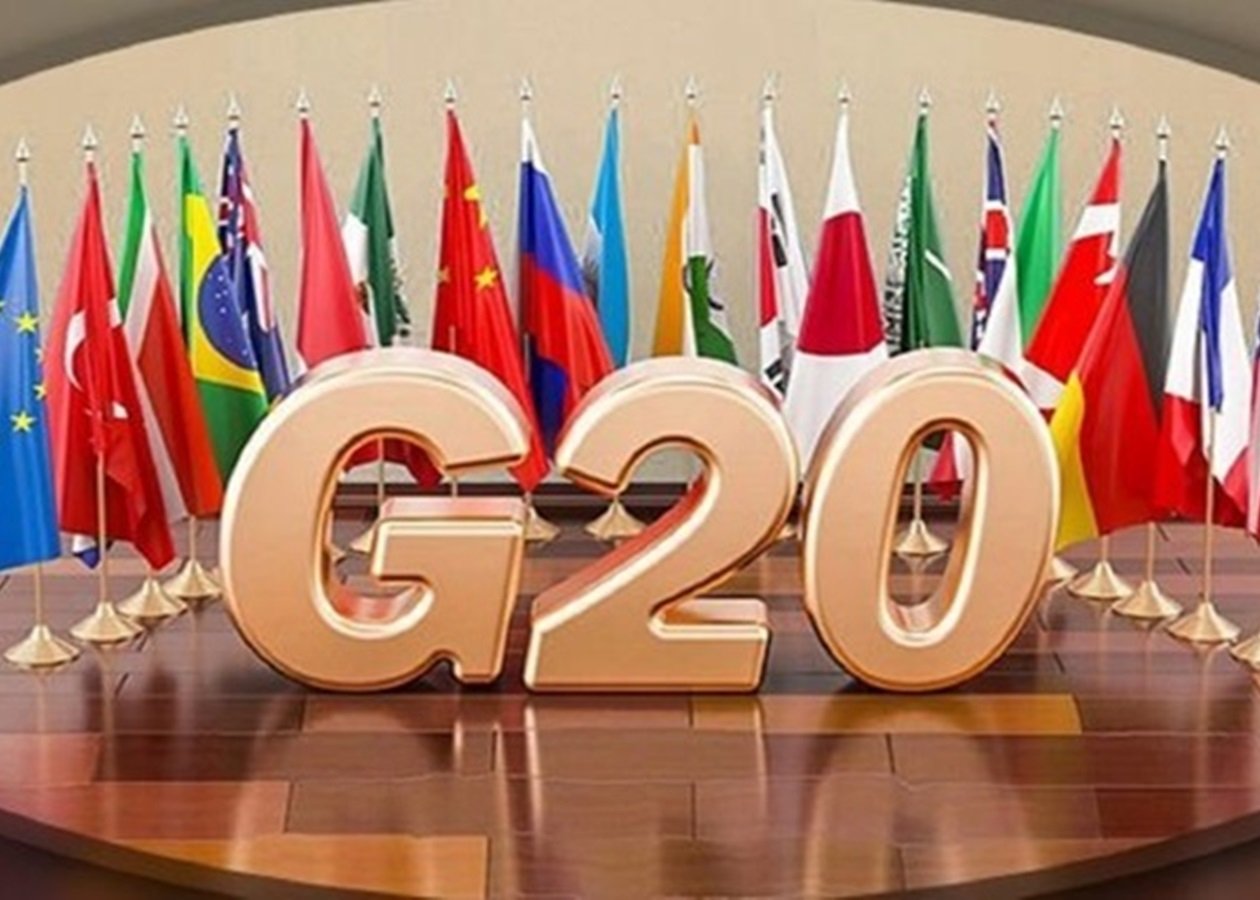
According to Open4Business, China has become the only country The G20, which did not support a number of provisions of the final
document of the meeting of finance ministers and heads of central banks of the
G20 countries, which took place from August 31 to September 1, 2026 in Asheville, North Carolina, USA.
As a result, instead of the joint
communique agreed by all participants, the USA as the head of the G20 published a statement of the chairman. The official document of the US Treasury stated that it was supported by all present members of the G20, except for China, which opposed the four sections. One of the main disagreements was the problem of global trade imbalances. The text, supported by other countries, calls on states to
reject non-market policies and practices that exacerbate imbalances.
Countries with excessive and persistent foreign trade surpluses are invited to
remove factors that restrain domestic consumption and create an excessive
dependence of economic growth on exports.
US Treasury Secretary Scott Bessent said after the meeting that
China was the only participant that who disagreed with this. He called China's
current account surplus the largest and "unsustainable" and said that the
model of a non-market economy, which constantly increases the supply of cheap
export products, cannot be sustainable.
China also did not support the provision to expand the role of the
International Monetary Fund in monitoring global economic imbalances.
The rest of the G20 advocated strengthening the IMF's analysis, including the assessment of
non-market policy, factors of formation of foreign trade imbalances and
their impact on other economies.
The Strait of Hormuz became another subject of disagreement. The G20 statement expressed concern over prolonged disruptions in energy trade and stressed the need for free, safe and predictable shipping through the Strait of Hormuz and other key sea routes. China opposed the entire relevant clause of the document.
Besides, Beijing did not agree with the section related to the
restructuring of sovereign debts and the further application of the G20 General
framework program to settle the debt problems of developing countries. An official document from the US Treasury clearly states that China objected to points 4, 10, 11 and 13 of the statement.
Despite the lack of full consensus, the remaining 19
members of the G20 supported the approach to reducing global imbalances. Reuters
notes that the issue has actually turned into a debate about China's export model, industrial support and the growth of supplies of Chinese products to world markets.
Disagreements arise against the background of increasing concerns of the US, the EU and
a number of other major economies about China's manufacturing capacity and the country's growing
trade surplus. Western powers fear that an excess
of Chinese industrial production could increase pressure on local manufacturers and
increase dependence on individual supply chains.
The meeting in Asheville was the second meeting of G20 finance ministers
and central bankers within the framework of the US presidency in 2026.
The main topics included economic growth, global imbalances, public
debt, digital assets, financial literacy and the state of the global financial
system.
The G20 currently includes 19 countries: Argentina, Australia, Brazil, Great Britain, Germany, India, Indonesia, Italy, Canada, China, Mexico, Russia, Saudi Arabia, the USA, Turkey, France, South Africa, South Korea and Japan.
In addition, full-fledged G20 members are the European Union and the
African Union. Thus, after the accession of the African Union in 2023, the G20 actually unites 21 participants — 19 countries and two regional
organizations.