Trade, international orientations and the attitude of Ukrainians to the countries of the world - analysis by Experts Club and Active Group
Editorial team•
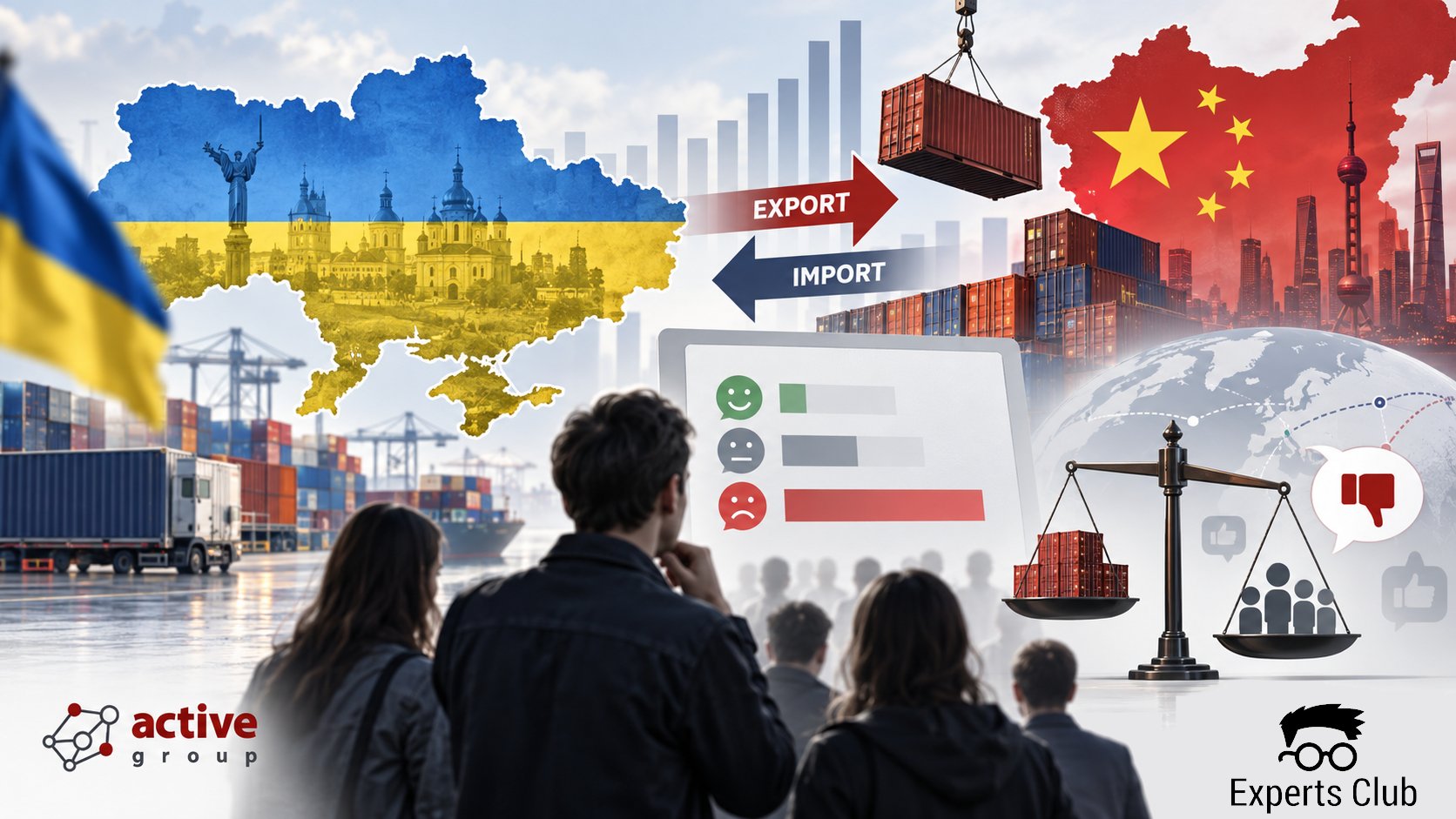
In August 2026, the Active Group company, together with the Experts Club information and analytical center, conducted the third wave of the study "Attitudes of Ukrainians to the countries of the world", in which the public perception of states was compared with their real role in Ukraine's foreign trade. The study showed a significant gap between the economic weight of individual partners and the attitude of Ukrainians towards them: China, which according to the results of the first half of 2026 became the largest trade partner of Ukraine with a turnover of about $14.68 billion, at the same time received the lowest balance of positive and negative evaluations — minus 25.4 percentage points. Instead, the best attitude balance was recorded for Canada — plus 73.8%. p. The study also covered the dynamics of attitudes towards key partners, the priorities of Ukrainians regarding the development of trade and economic relations, and the assessment of the role of various countries in contributing to the achievement of peace in Ukraine. This is the third wave of the survey after the August 2025 and March 2026 surveys; in August 2026, 800 adult citizens of Ukraine were surveyed, and the stated maximum theoretical error is 3.5%.
The study "Attitudes of Ukrainians to the countries of the world" combines two important dimensions - the actual intensity of Ukraine's foreign economic ties and the public perception of other countries. This approach allows you to see how the trade weight of a specific country coincides with the level of positive attitude towards it among Ukrainians. In many cases, there is no direct relationship: high trade can coexist with low public evaluations, while states with smaller trade volumes can enjoy significantly higher sympathy.
The survey was conducted in August 2026 using an online self-completion questionnaire in the SunFlowerSociology panel. among 800 citizens of Ukraine over the age of 18. The sample is representative by age, gender and region, and the maximum theoretical margin of error for figures at the 50% level is ±3.5 percentage points. Therefore, when interpreting close values between individual countries, it is more important to evaluate general groups and trends than minor differences in several points.
The largest direction of Ukrainian merchandise exports in the first half of 2026 was Poland — $2.383 billion, followed by Turkey with $1.781 billion, Italy with $1.280 billion and Germany with $1.267 billion. Notable positions were also occupied by Spain, the Netherlands and China. The geography of the top ten shows the predominant orientation of exports to European markets, although Turkey, China and Egypt remain important. Thus, Europe continues to play a central role in the sale of Ukrainian products.
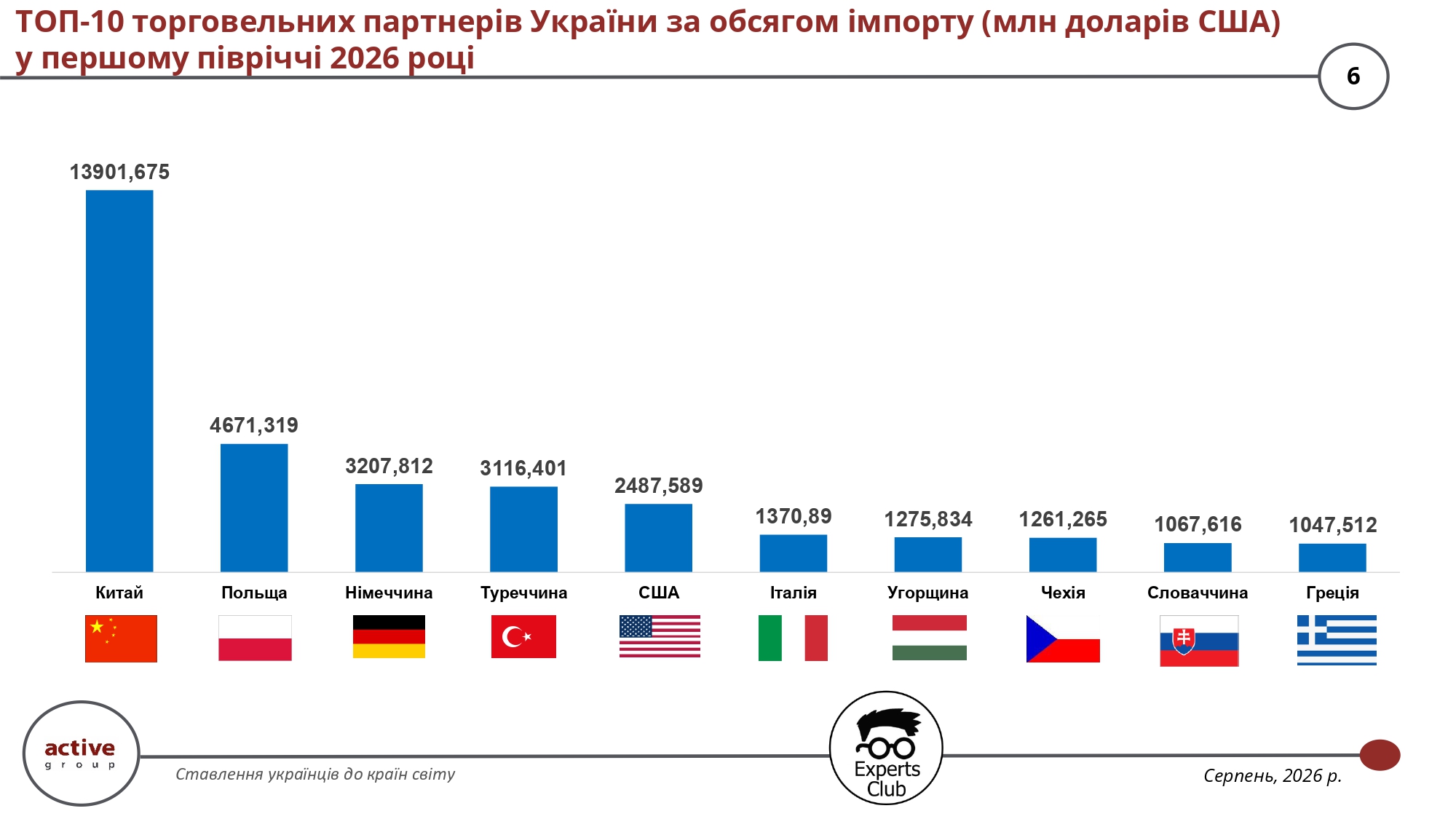
Imports are much more concentrated around one partner: $13.902 billion worth of goods were imported from China in the first half of the year, while Poland, which ranks second, had $4.671 billion. Germany, Turkey and the United States followed. Such a large gap between China and other suppliers demonstrates the high dependence of the domestic Ukrainian market on Chinese industrial, technological and consumer goods and at the same time is the main reason for a significant bilateral trade deficit.
Ukraine received the largest positive balance in trade with Spain — $578 million, Egypt — $527 million and Moldova — $467 million. Algeria, the Netherlands, Lebanon, Libya, Tunisia, Iraq and Yemen also entered the top ten. It is significant that most of the countries with a surplus are not among the largest partners of Ukraine in terms of total turnover. This shows that not only the largest economies can be important for maintaining the foreign trade balance, but also markets where Ukrainian exports structurally outweigh imports.
In terms of total trade volume of $14.68 billion, China is more than twice ahead of Poland - $7.055 billion. The next positions are occupied by Turkey, Germany, the USA and Italy, after which trade volumes no longer exceed $2 billion. This structure means that Ukraine's foreign trade is geographically diversified, but its upper segment remains very concentrated. It is especially important that the largest partner simultaneously creates the largest bilateral deficit.
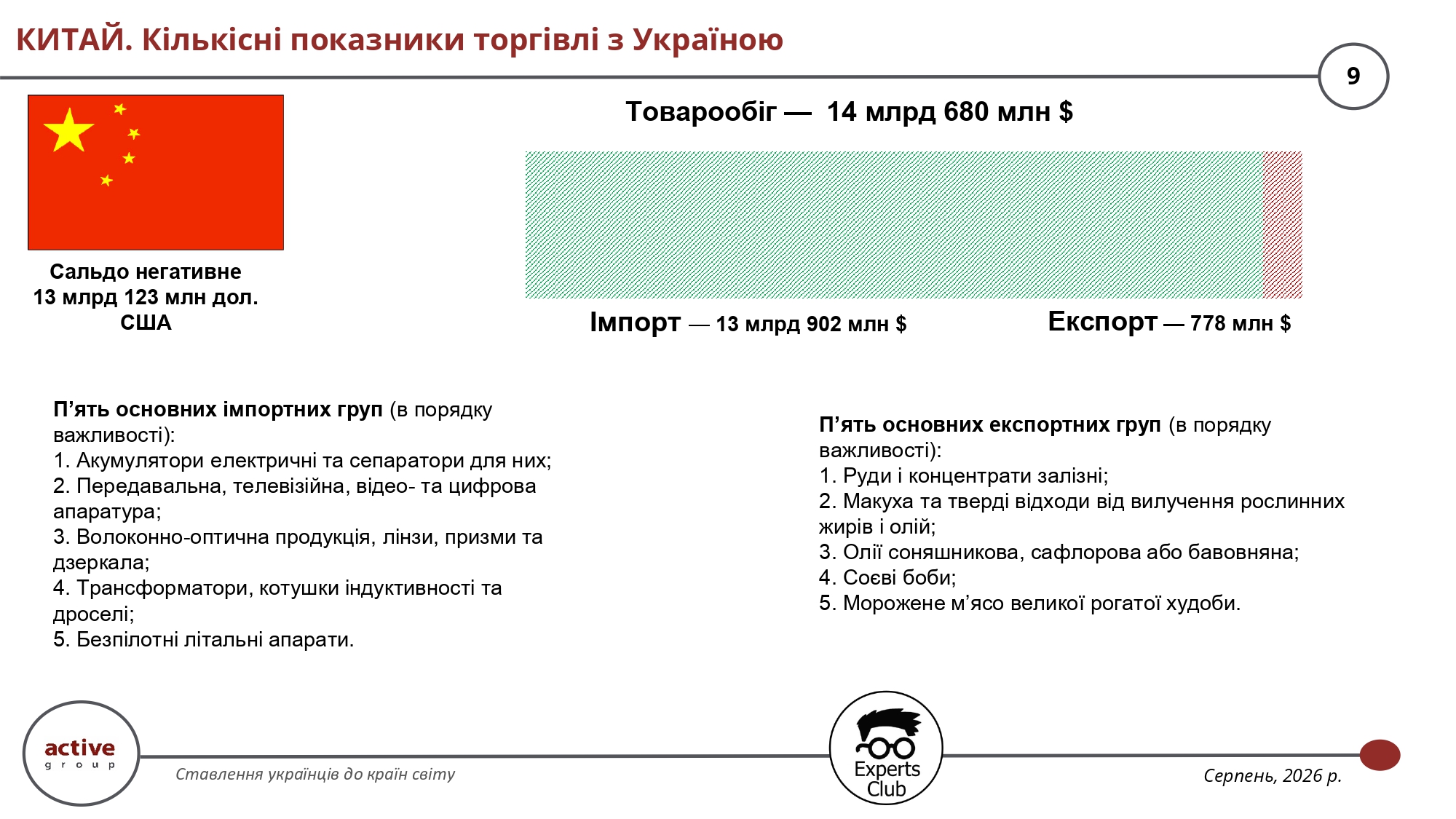
China is the largest trade partner of Ukraine, but the nature of this trade is sharply asymmetric: with imports of almost $13.9 billion, Ukrainian exports are only about $778 million, and the negative balance exceeds $13.1 billion Ukraine sells mainly iron ore, oilseeds, vegetable oils, soybeans and meat to China, while it imports batteries, electronics, optical products, transformers and drones. This clearly demonstrates the difference between the raw material and agricultural structure of Ukrainian exports and the more technological structure of Chinese supplies.
Poland is the second trading partner of Ukraine with a turnover of about $7.06 billion and at the same time the largest single market for Ukrainian exports — $2.383 billion. However, imports from Poland are almost twice as large and amount to $4.671 billion, which creates a deficit of about $2.29 billion. Ukrainian exports include soybean oil, metal products, iron ore, and cable products, while petroleum products, gases, aviation components, UAVs, and fertilizers take a significant place in supplies from Poland. $4.9 billion, but imports of $3.116 billion significantly exceeded exports of $1.781 billion, creating a deficit of approximately $1.34 billion. Ukraine supplies the Turkish market primarily with corn, vegetable oils, soybeans, metal semi-finished products, and pig iron. In the reverse direction, radar and radio navigation equipment, rolled metal, petroleum products, and citrus fruits arrive. Thus, Turkey remains both an important market for Ukrainian agricultural and metallurgical products and a major supplier of industrial goods.
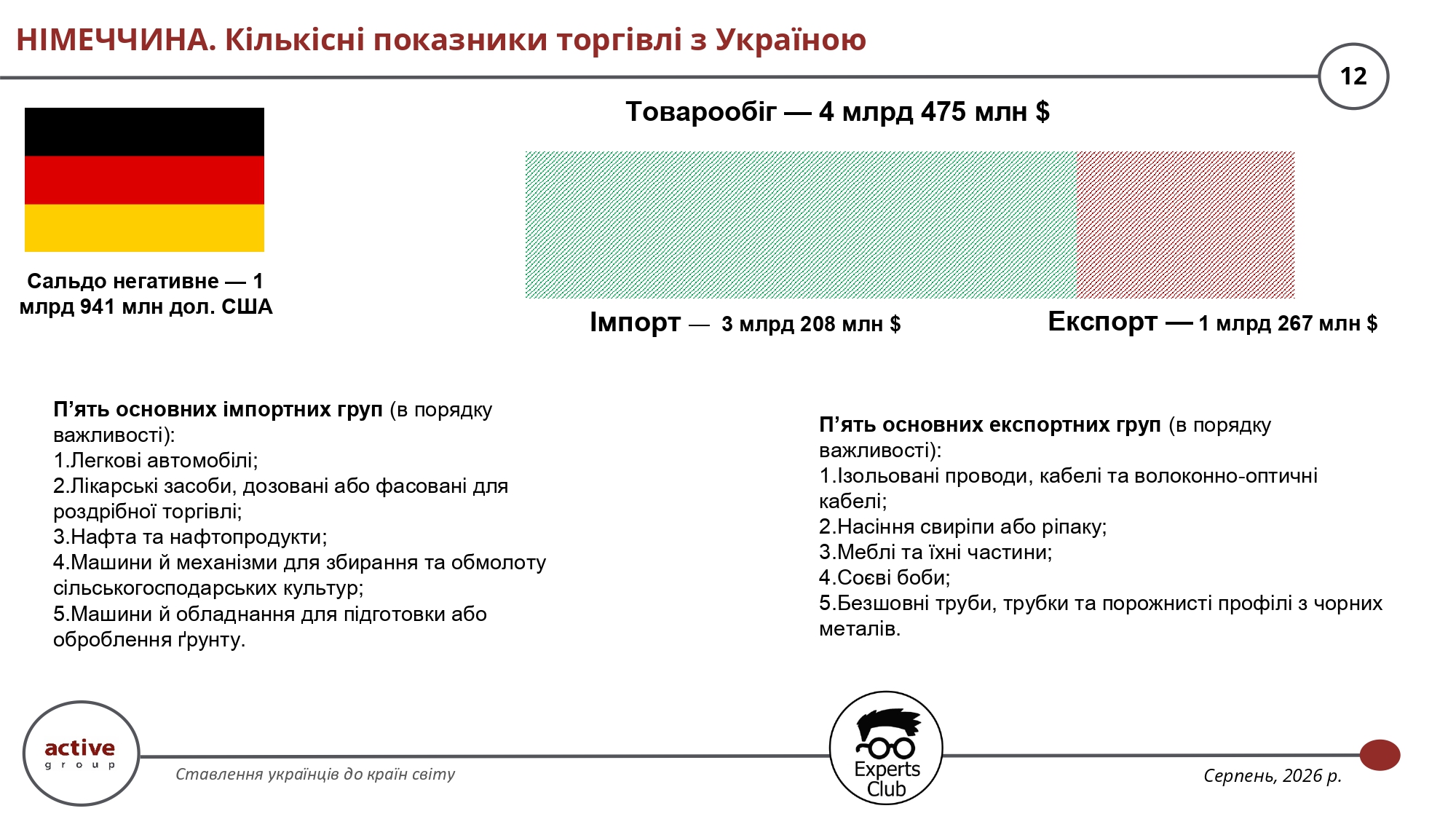
Trade with Germany is also characterized by a significant deficit: while exports are about $1.267 billion, imports are $3.208 billion. Ukraine exports mainly cable products, canola, furniture, soybeans and metal pipes, while the key items of German imports are cars, medicines, petroleum products and agricultural machinery. Such a structure well reflects the difference in the technological complexity of mutual supplies and explains the steady predominance of German exports in bilateral trade.
Ukraine's trade with the United States amounted to about $3.07 billion, of which almost $2.49 billion accounted for American imports and only $587 million for Ukrainian exports. As a result, the deficit exceeded $1.9 billion. Ukraine supplies the United States with pig iron, juices, metal pipes, vegetable oils, and laboratory reagents, but instead imports petroleum products, cars, coal, telecommunications equipment, and tractors. Bilateral trade therefore remains important, but its structure is significantly skewed in favor of American exports.
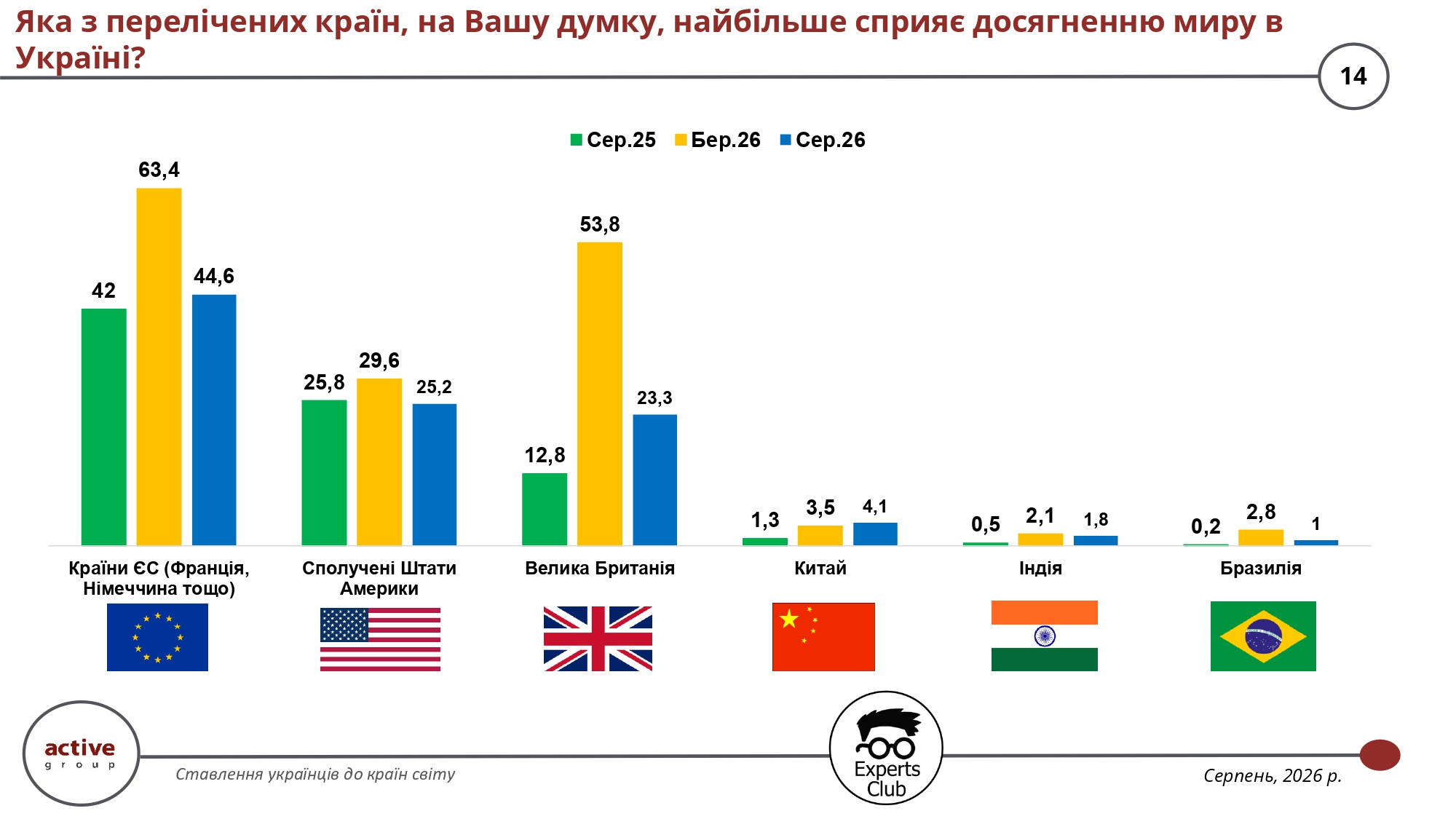
In August 2026, 44.6% of respondents called EU countries the most important for promoting peace in Ukraine, 25.2% - the USA, and 23.3% — Great Britain. The indicators of China, India and Brazil remain single-digit - respectively 4.1%, 1.8% and 1%. Compared to March, the evaluations of the role of the EU and especially Great Britain have significantly decreased, but the Western countries as a whole continue to dominate the public perception of their potential contribution to a peaceful settlement.
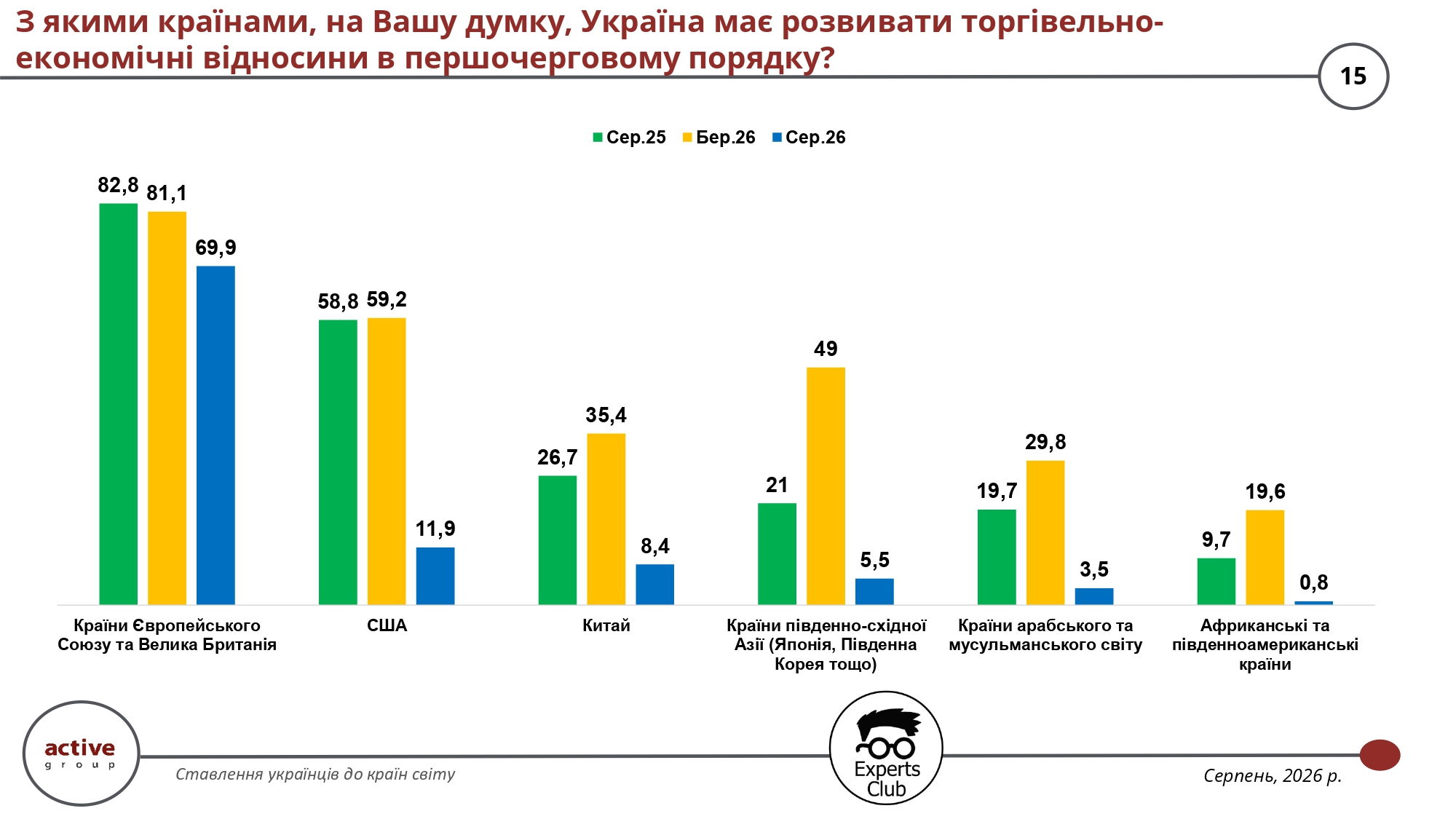
The countries of the European Union and Great Britain remain the absolute first priority for the development of trade and economic relations - in August, they were named by 69.9% of respondents. Much lower figures were obtained by the USA — 11.9%, China — 8.4%, the countries of Southeast Asia — 5.5%, the Arab and Muslim world — 3.5%, Africa and South America — only 0.8%. Therefore, public expectations regarding the economic geography of Ukraine are extremely strongly concentrated in the European direction.
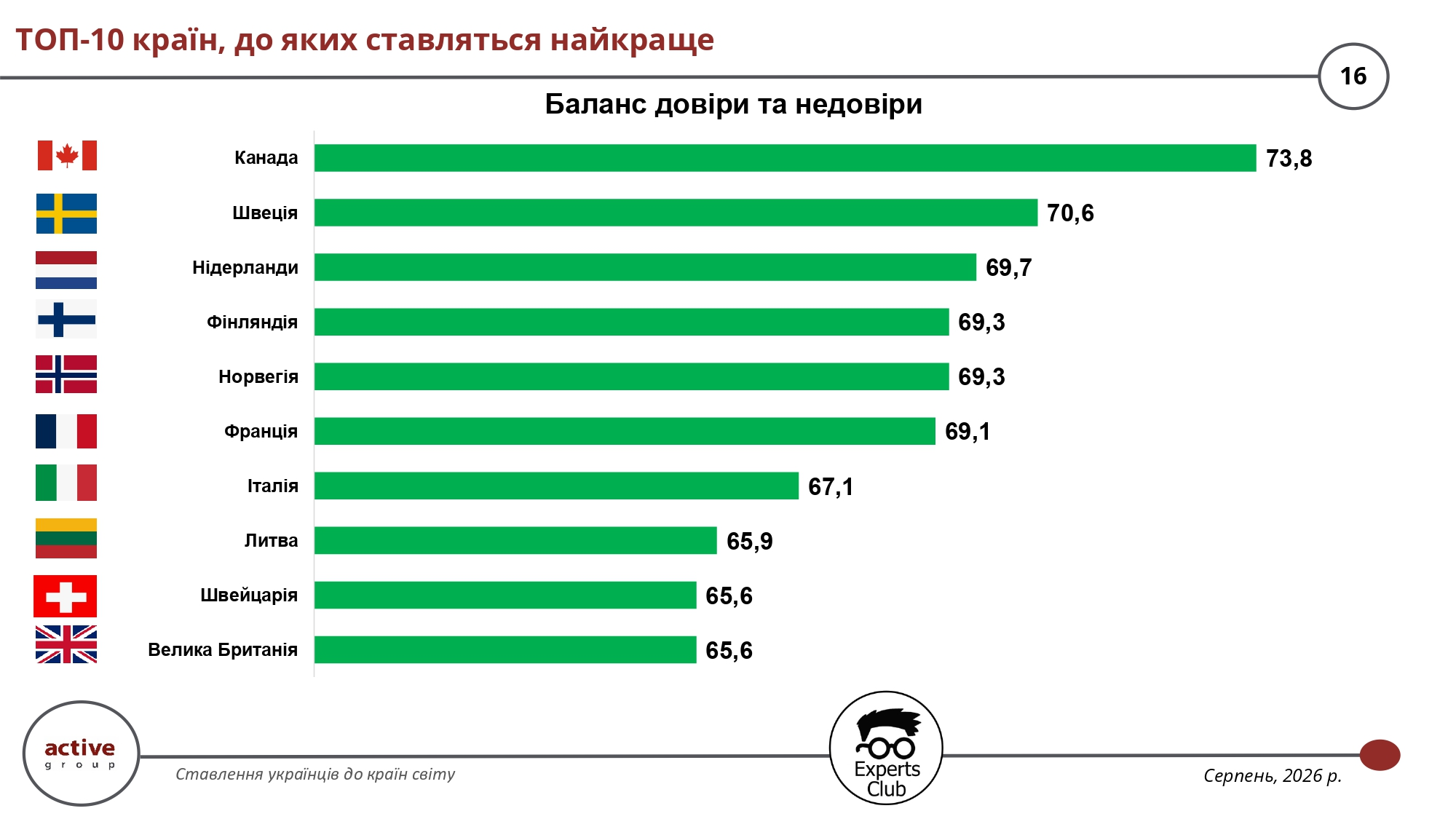
Canada received the best balance of positive and negative attitudes among the studied countries — 73.8 point Sweden, the Netherlands, Finland, Norway, France, Italy, Lithuania, Switzerland and Great Britain were next. It is characteristic that the entire top ten consists of Western and Northern European countries and Canada. This indicates a formed core of countries with a high level of public commitment, which largely coincides with the Western foreign economic and international orientation of Ukrainians.
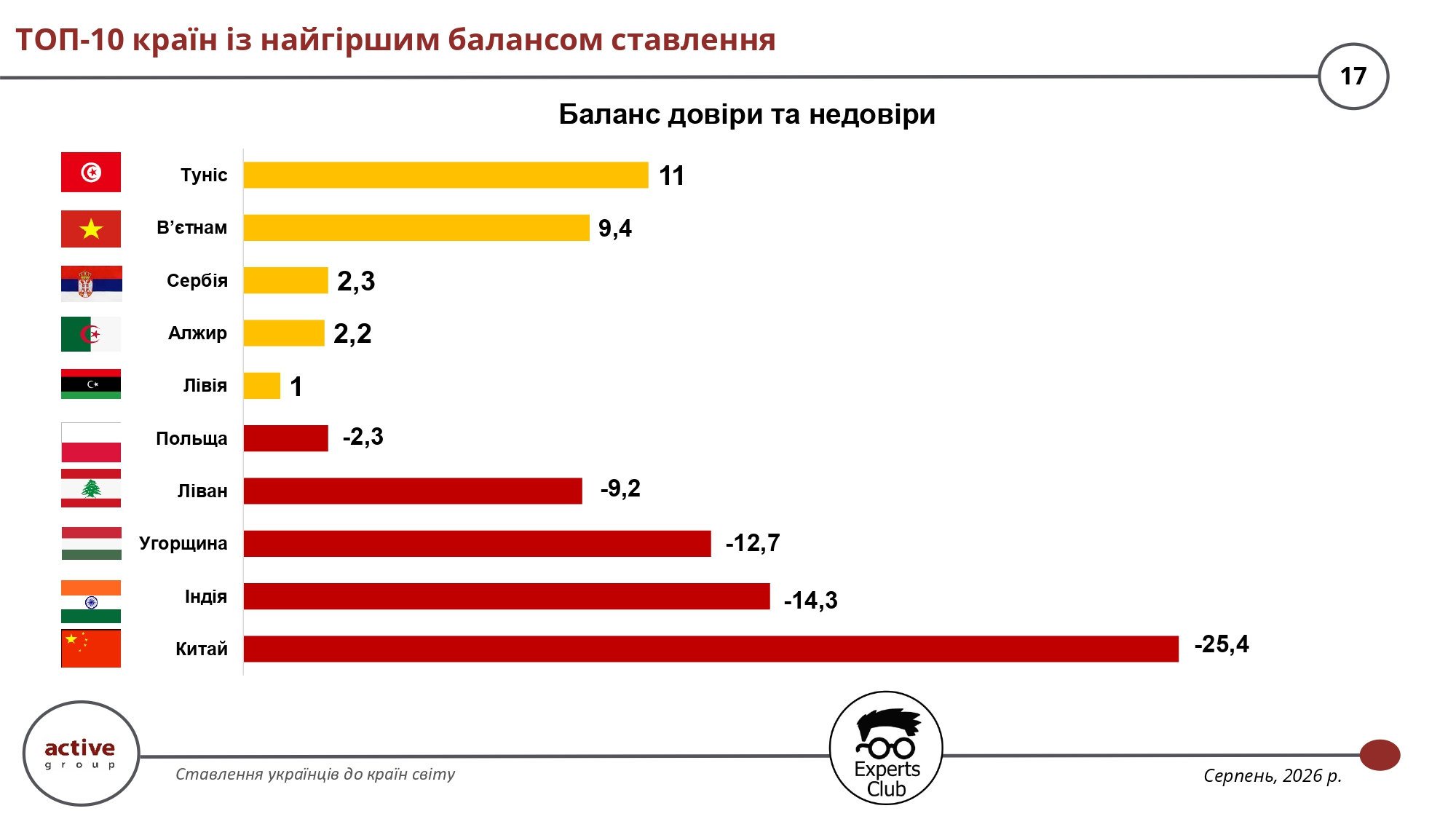
The lowest balance of attitudes recorded for China — minus 25.4 points, India — minus 14.3, and Hungary — minus 12.7. Lebanon and Poland also have a negative balance, while Libya, Algeria, Serbia, Vietnam and Tunisia remain in a slightly positive zone. The presence among outsiders of China, which at the same time is Ukraine's largest trade partner, is particularly revealing. This is one of the clearest examples of the gap between the country's economic importance and its public perception.
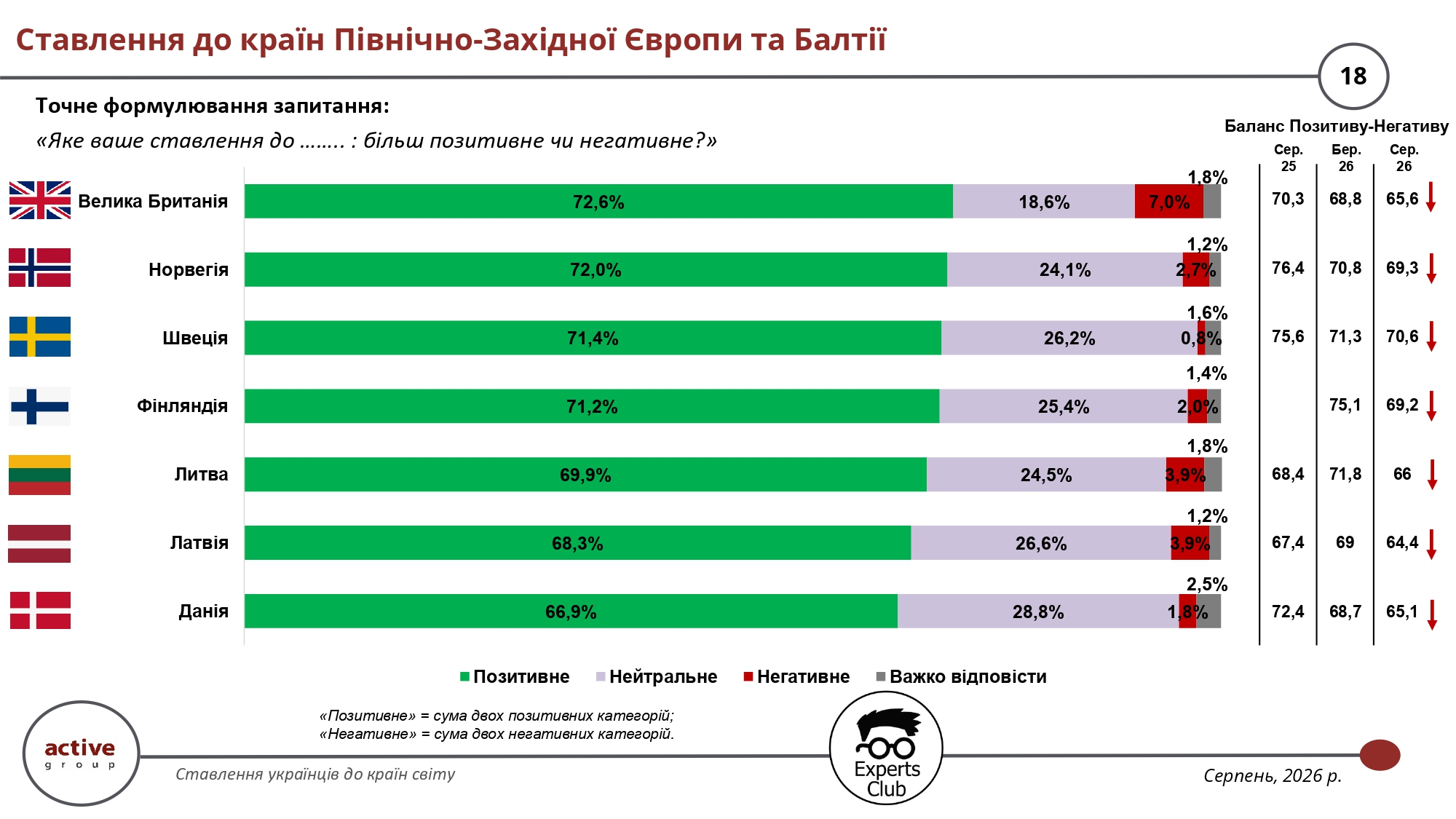
The attitude of Ukrainians to the states of North-Western Europe and the Baltic States remains mostly positive: the share of positive assessments for Great Britain, Norway, Sweden, Finland, Lithuania, Latvia and Denmark is approximately 67–73%. Negative estimates are in most cases at the level of only a few percent. At the same time, the dynamics of the balance compared to previous waves are not the same: some countries have seen a certain decline, but the overall level of commitment remains very high.
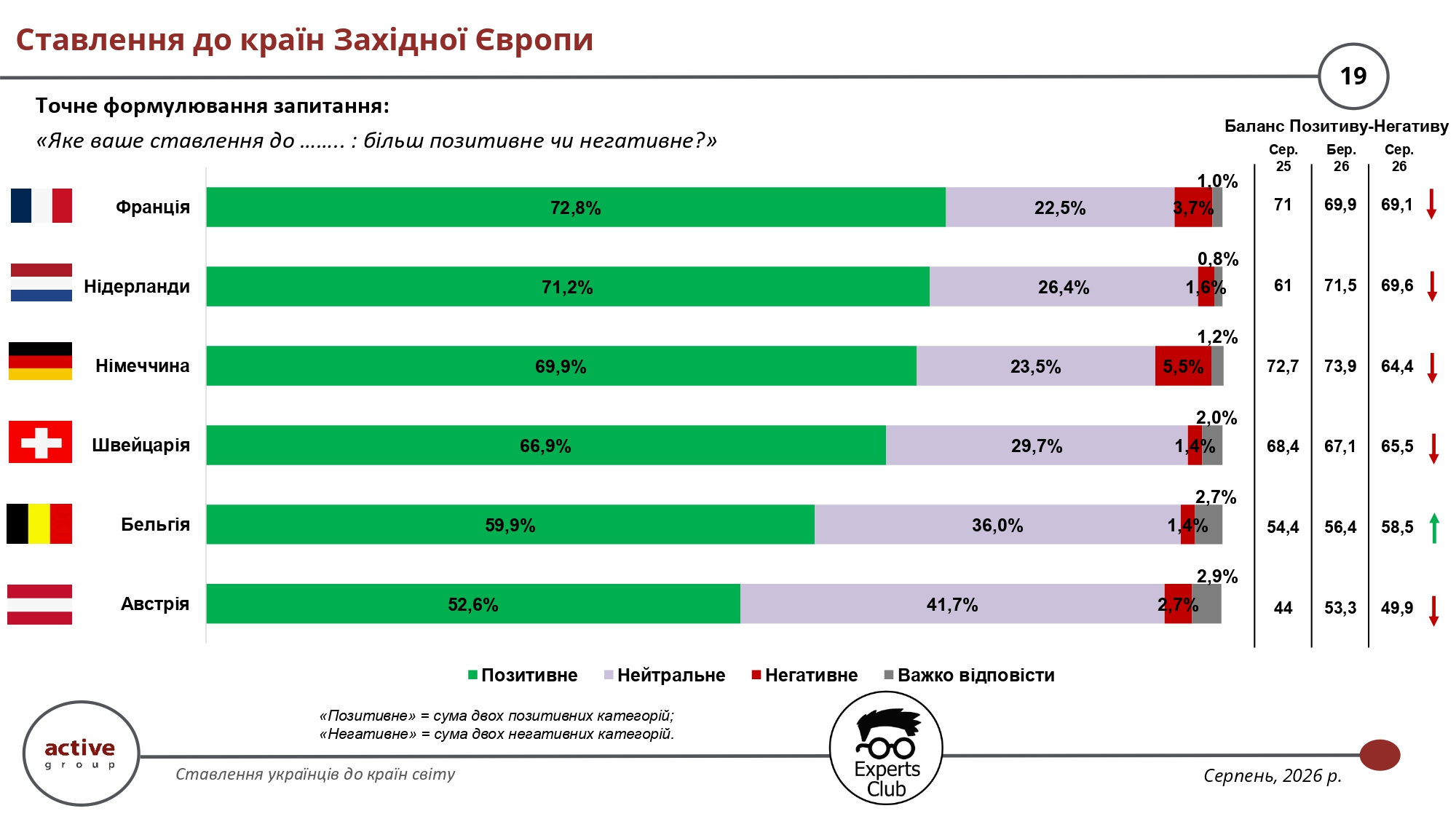
Western Europe has the highest current positive ratings receive France — 72.8% and the Netherlands — 71.2%, followed by Germany with 69.9%. For Switzerland, the positive attitude is 66.9%, Belgium — 59.9%, Austria — 52.6%. In all six countries, the balance remains firmly positive, although the dynamics of individual states differ. The most noticeable feature of the group is that even in countries with a lower level of positive evaluations, the main alternative is a neutral, not a negative attitude.
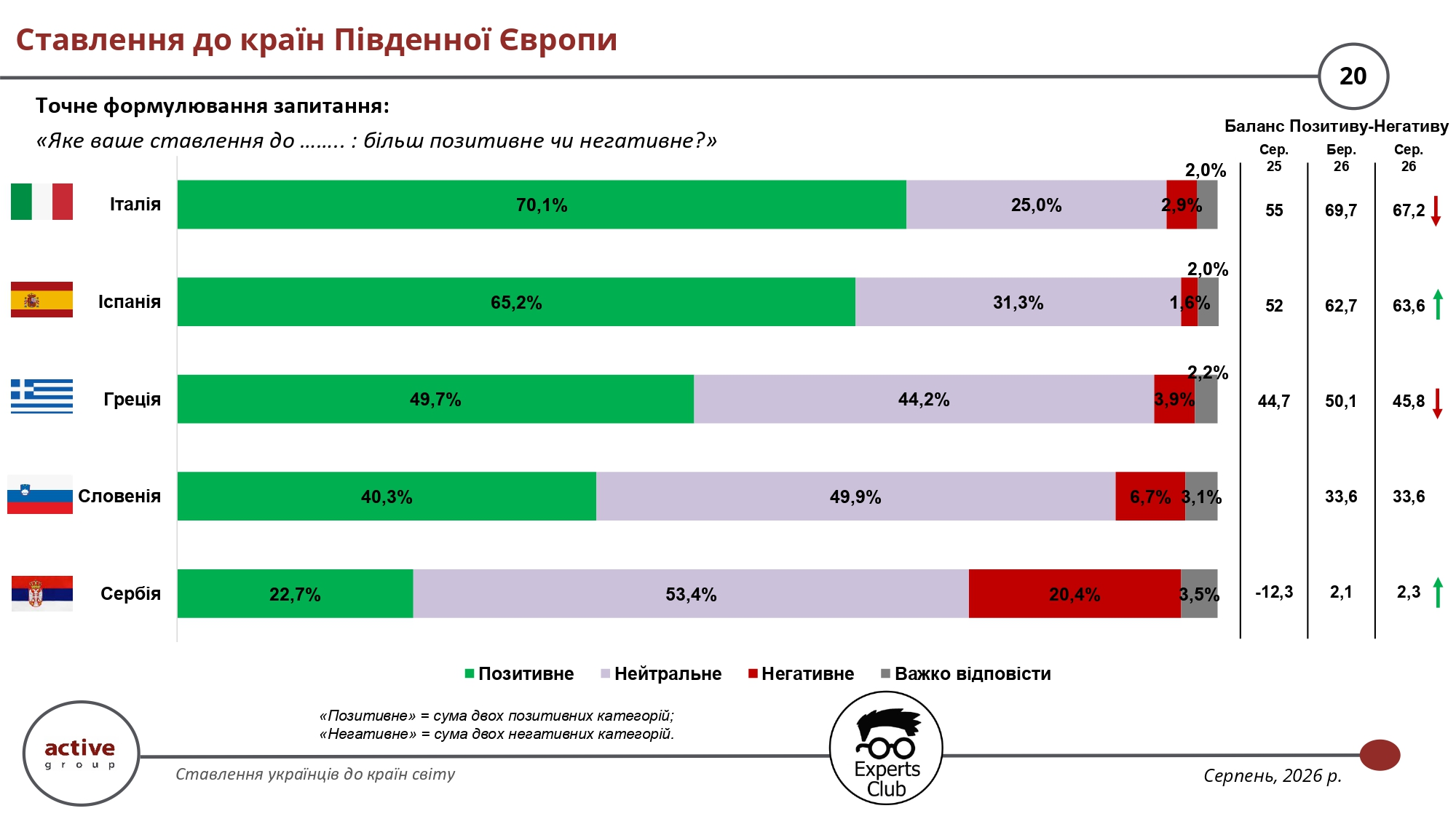
Among the countries of Southern Europe, Ukrainians have the best attitude towards Italy and Spain: positive assessments are 70.1% and 65.2%, respectively. Greece is roughly in the middle with 49.7% positive ratings, while Slovenia has 40.3%. Serbia differs sharply from other countries of the group: 22.7% have a positive attitude towards it, 20.4% have a negative attitude towards it, and the majority of respondents choose a neutral position. At the same time, the balance towards Serbia has improved compared to August 2025.
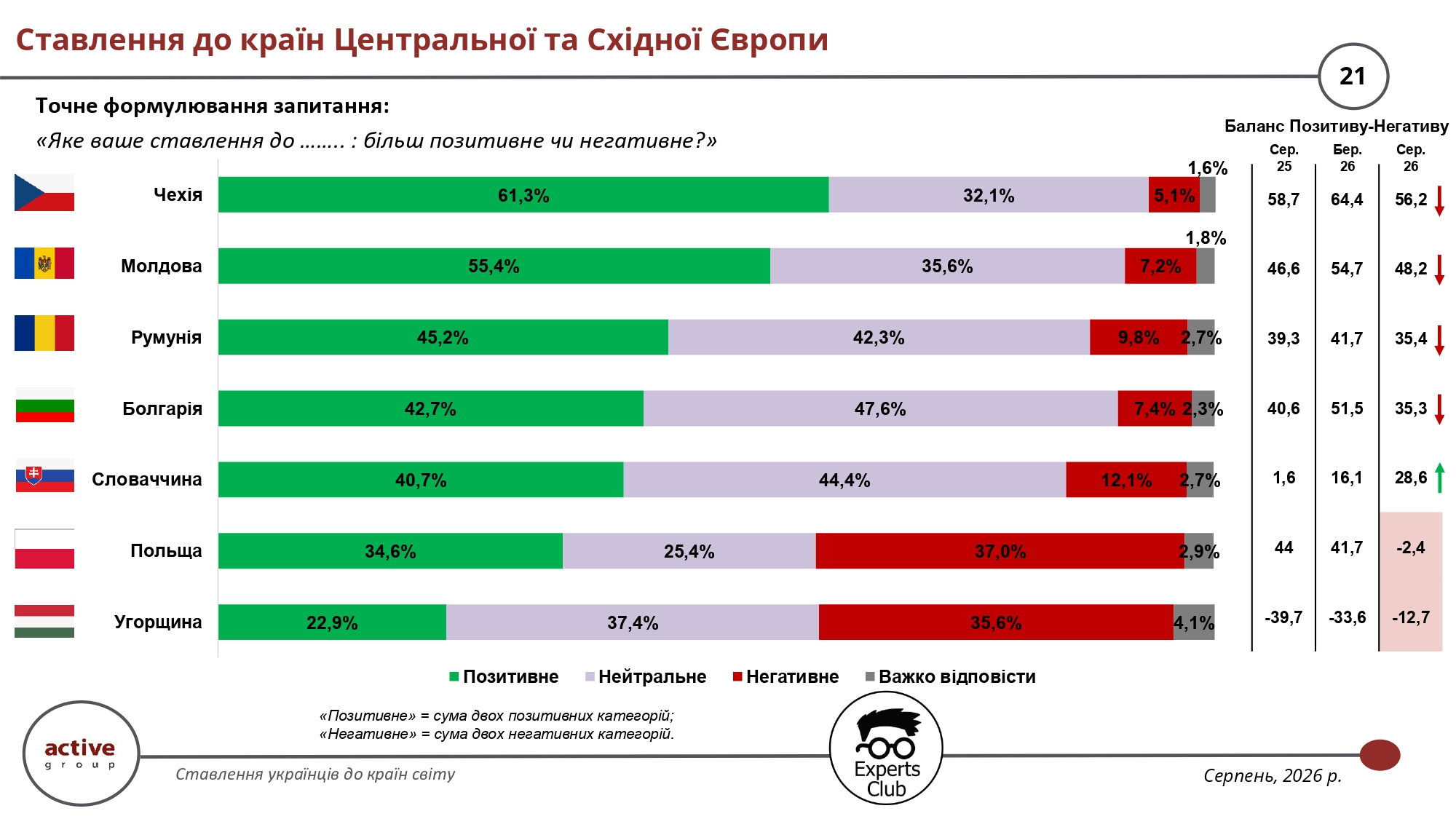
In this group, the Czech Republic has the highest indicators: a positive attitude towards it was expressed by 61.3% of respondents, and the balance of positive and negative is 56.2 points. It is followed by Moldova, Romania, Bulgaria and Slovakia. Poland, on the other hand, shows a sharp change: a positive attitude is 34.6%, a negative attitude is 37%, and the balance has gone into the negative. Hungary also remains in the negative zone, although its balance improved from minus 39.7 in August 2025 to minus 12.7 in August 2026.
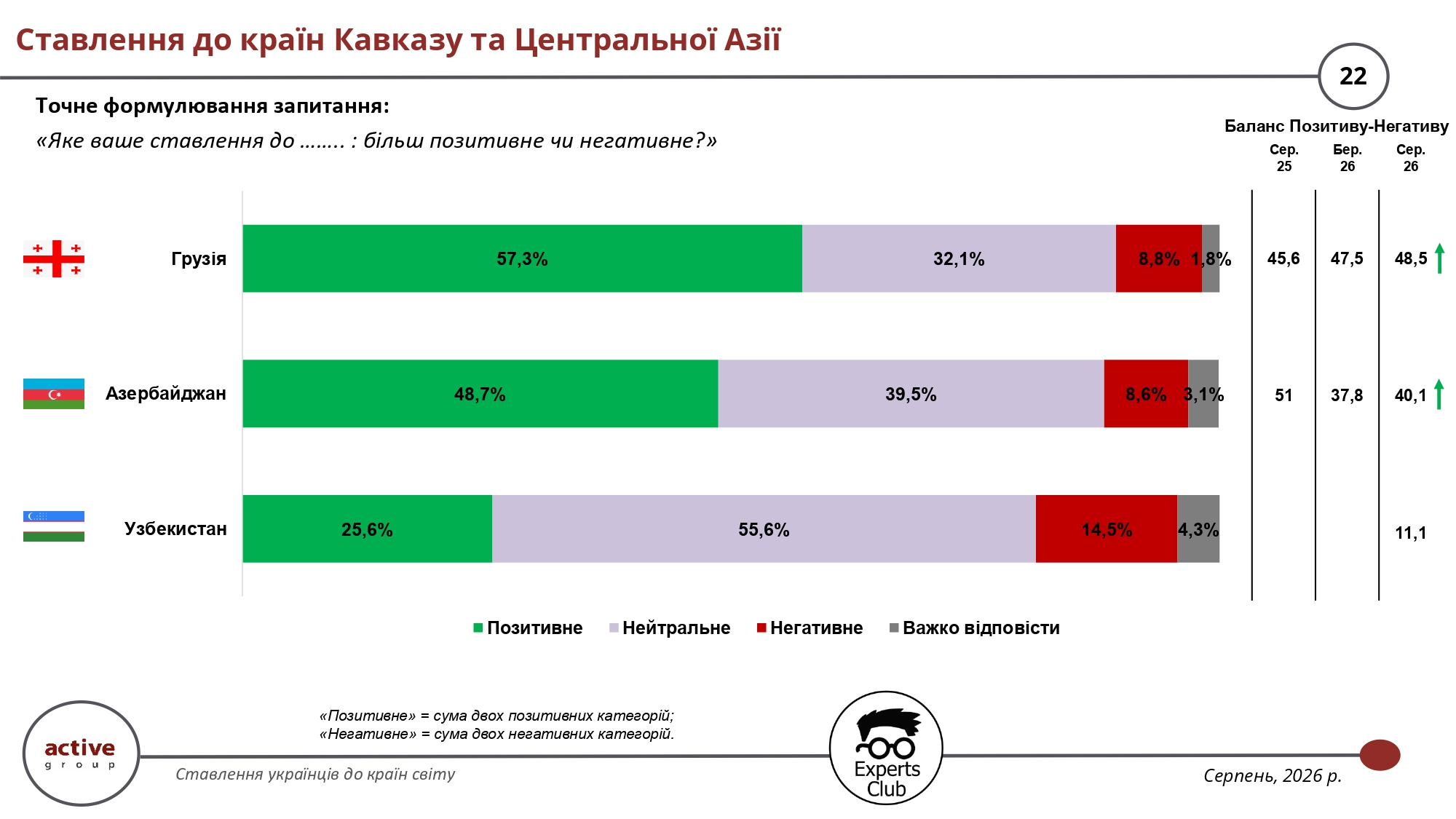
Ukrainians view Georgia the best among the represented states of the Caucasus and Central Asia: 57.3% of respondents rate it positively, and the balance is 48.5 points. Azerbaijan has 48.7% positive ratings and a balance of 40.1. Uzbekistan is significantly behind: 25.6% expressed a positive attitude, while 55.6% take a neutral position. The high proportion of neutral answers is a characteristic feature of the perception of the countries of this region, which are less politically and informationally visible for Ukrainian society.
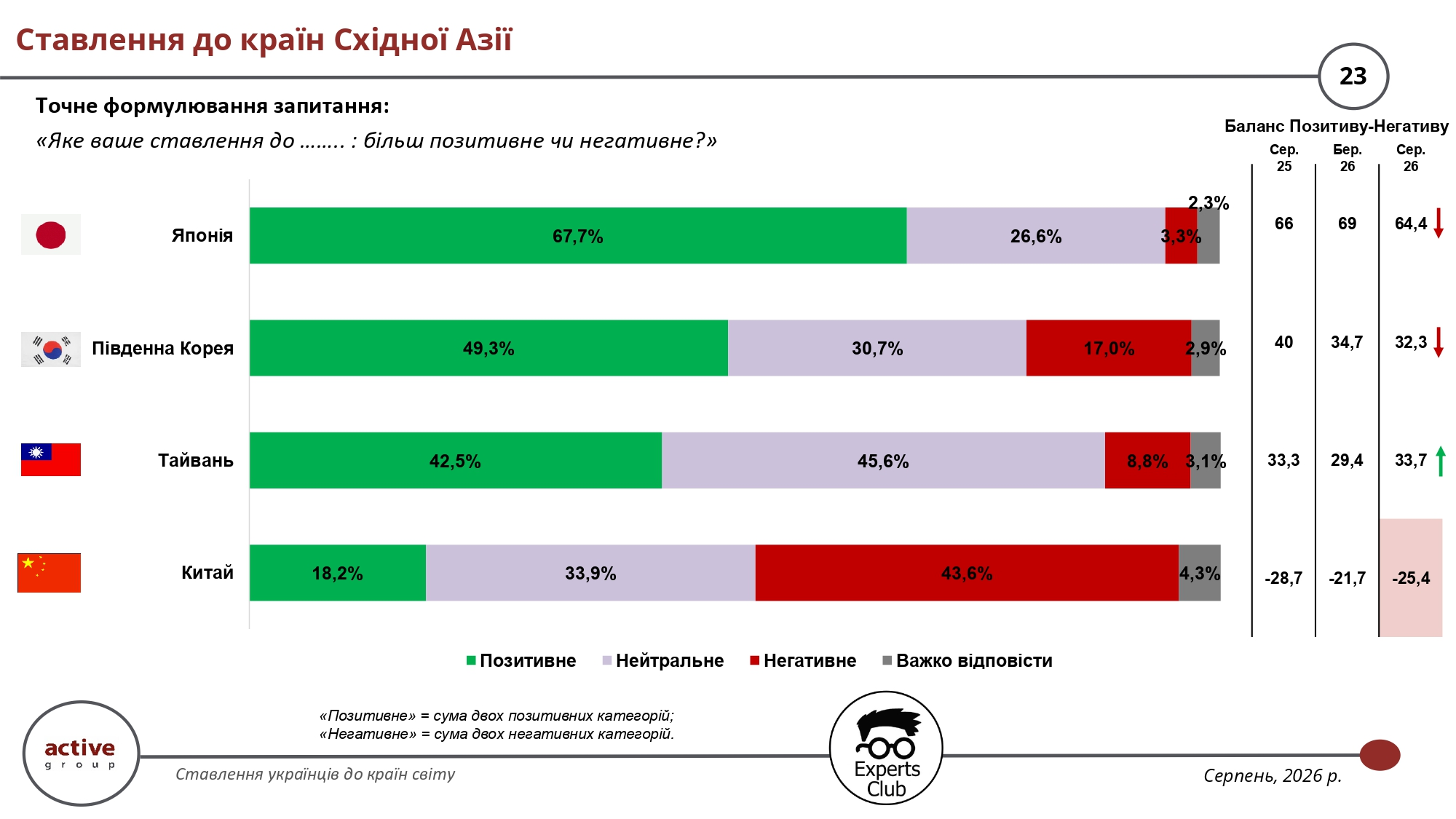
The perception of the countries of East Asia is extremely contrasting. Japan has 67.7% positive ratings and a balance of 64.4 points, South Korea — 49.3% positive ratings, Taiwan — 42.5%. China, on the contrary, receives only 18.2% of positive evaluations and 43.6% of negative ones, which forms the lowest balance among the studied countries — minus 25.4. Thus, Ukrainian public opinion clearly distinguishes between individual Asian countries and does not perceive the region as a homogenous geopolitical or economic block. a very high proportion of neutral attitudes. It is about 60% for Thailand and Vietnam and almost 69% for Malaysia. Positive attitudes range from 18-21% for Malaysia, Indonesia and Vietnam to 30.9% for Thailand. India stands out with a higher level of negativity: 31.5% evaluate it negatively against 17.2% positive evaluations, as a result of which the balance is minus 14.3 points.
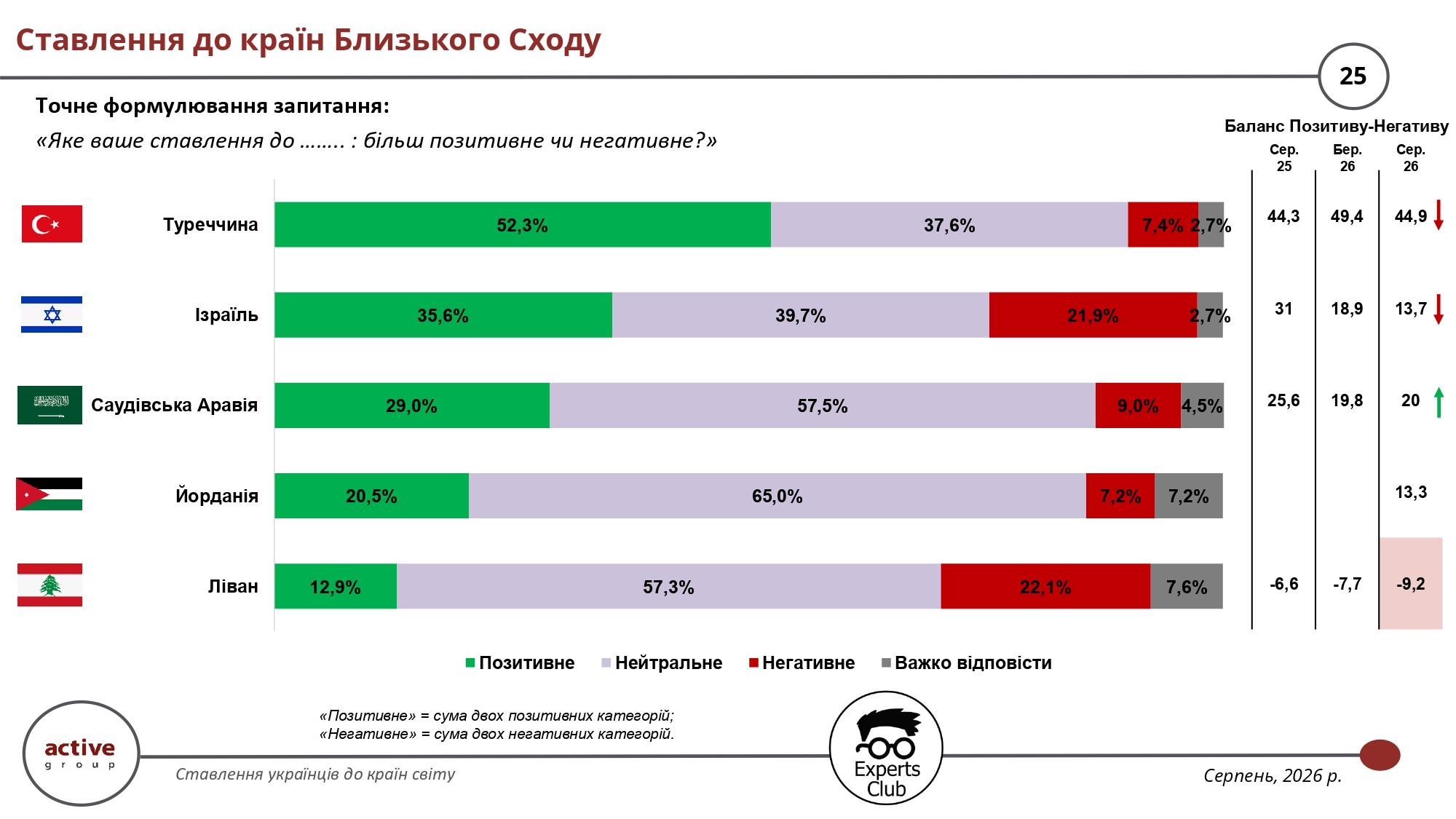
Among countries In the Middle East, Ukrainians have the best attitude towards Turkey: 52.3% of positive assessments and a balance of 44.9 points. For Israel, the positive share is 35.6%, but the balance is decreasing in dynamics and in August 2026 is 13.7. Saudi Arabia and Jordan are mostly perceived as neutral, and Lebanon is the only country in this group with a negative balance of minus 9.2. In general, the region is characterized by a much less unambiguous perception than European countries.
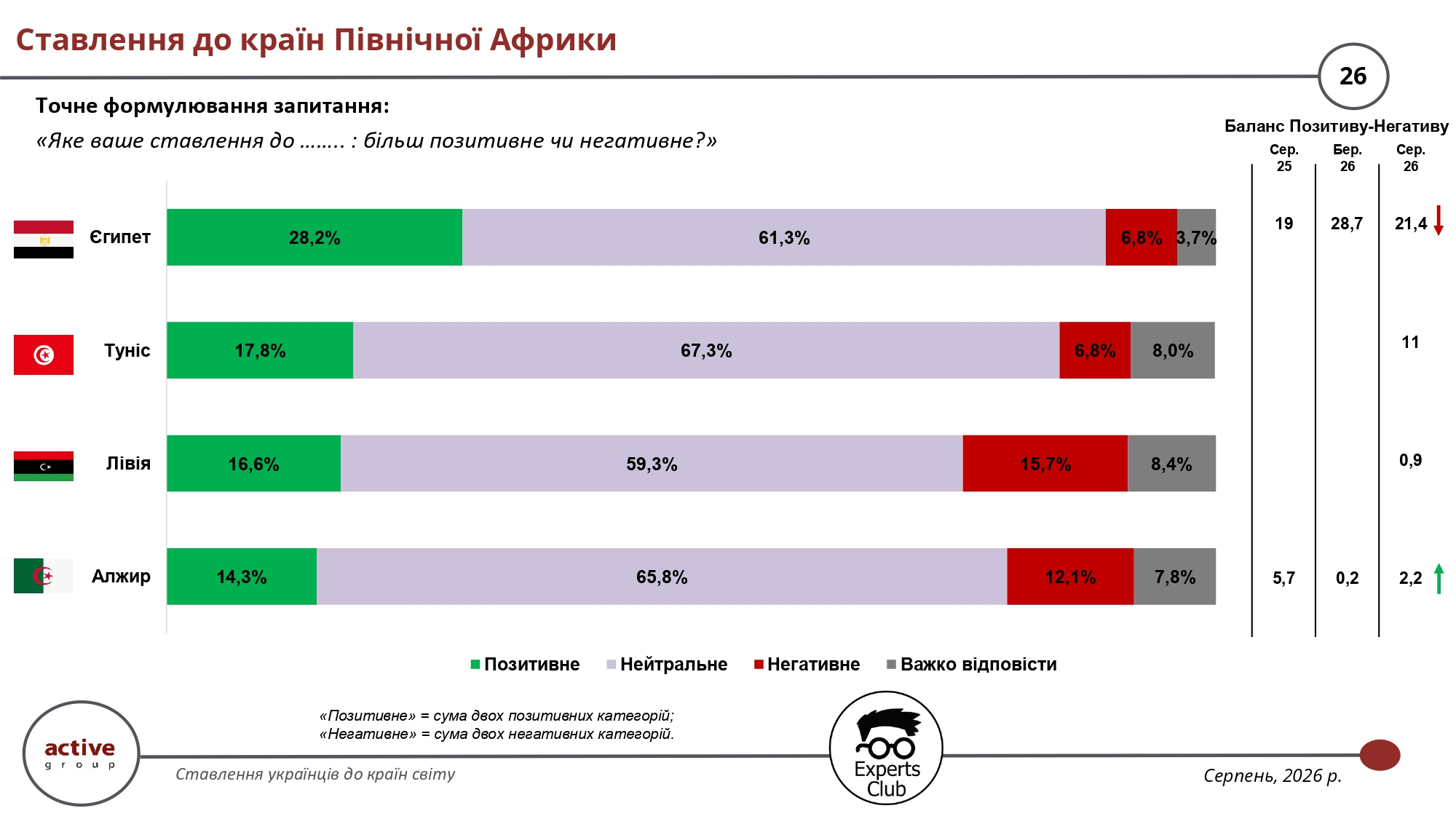
For the states of North Africa, a neutral attitude is dominant: its share ranges from approximately 59% to 67%. Egypt has the highest share of positive evaluations — 28.2%, and its balance is 21.4 points. In Tunisia, the balance is equal to 11, in Algeria - about 2.2, and in Libya - only 0.9. Thus, there is no negative perception of the region as a whole, but a strong positive image is formed mainly only about Egypt.
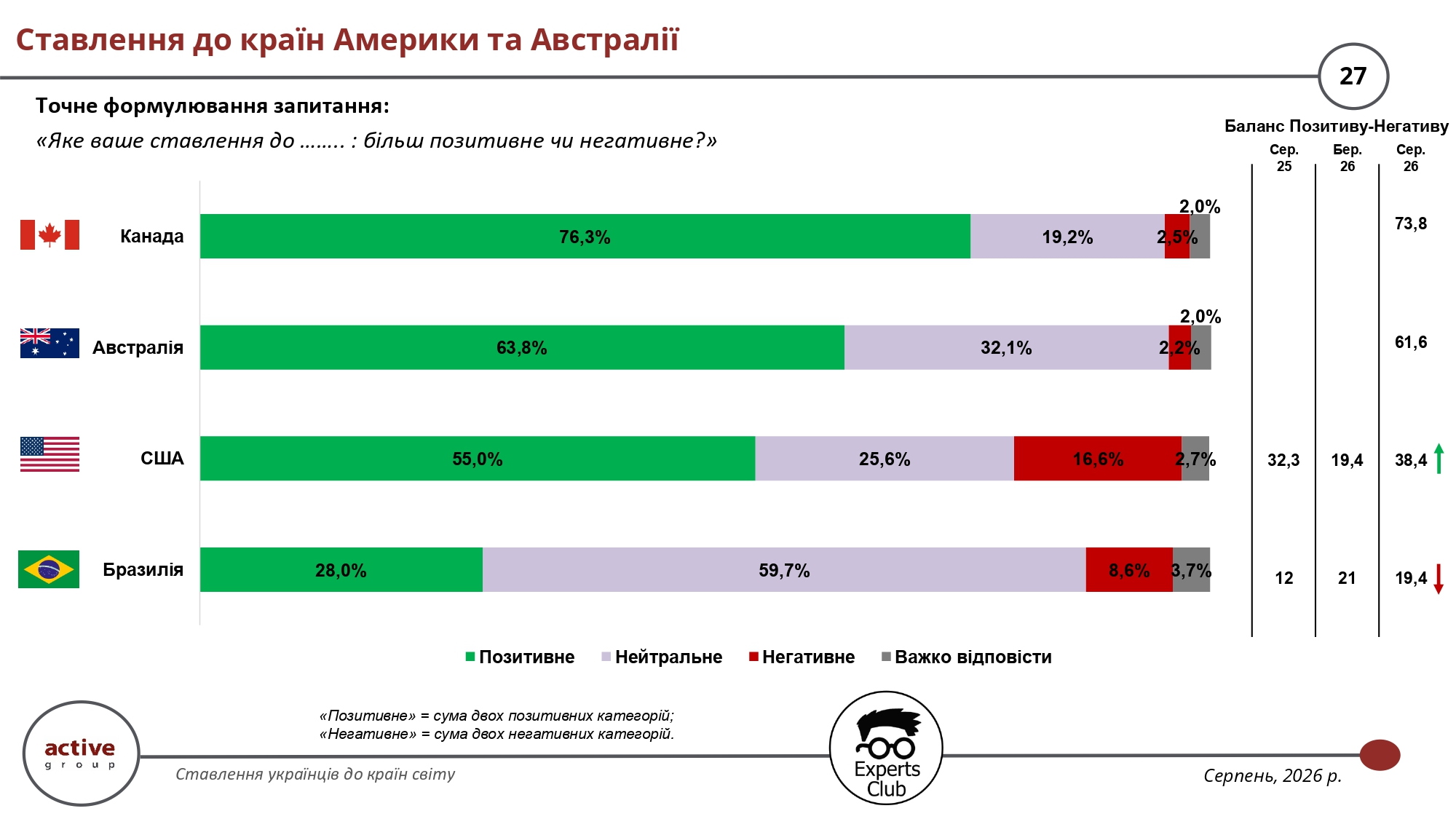
Canada has the best result not only in its regional group, but also among all the surveyed states: 76.3% of Ukrainians have a positive attitude towards it, and the balance reaches 73.8 points. Australia also has very high scores with 63.8% positive ratings and a balance of 61.6. In the US, 55% are positive, with the balance rising to 38.4 from 19.4 in March 2026. Brazil is perceived much more neutrally: 59.7% of respondents take a neutral position and only 28% take a positive position.
The overall results of the study demonstrate a significant gap between the economic geography of Ukraine and the geography of public sympathies. China is the country's largest trading partner, but at the same time has the lowest attitude balance, while Canada, Northern and Western European countries form the top of the public favorability rankings. A separate signal is the deterioration of the attitude towards Poland against the background of its extremely important role in Ukraine's foreign trade. For states, businesses, and diplomatic missions, these data show that economic interdependence alone does not guarantee a positive public image, and reputational capital can differ significantly from a country's actual weight in trade. The presentation was prepared on the basis of a study of the attitude of Ukrainians to the countries of the world, conducted in August 2026.