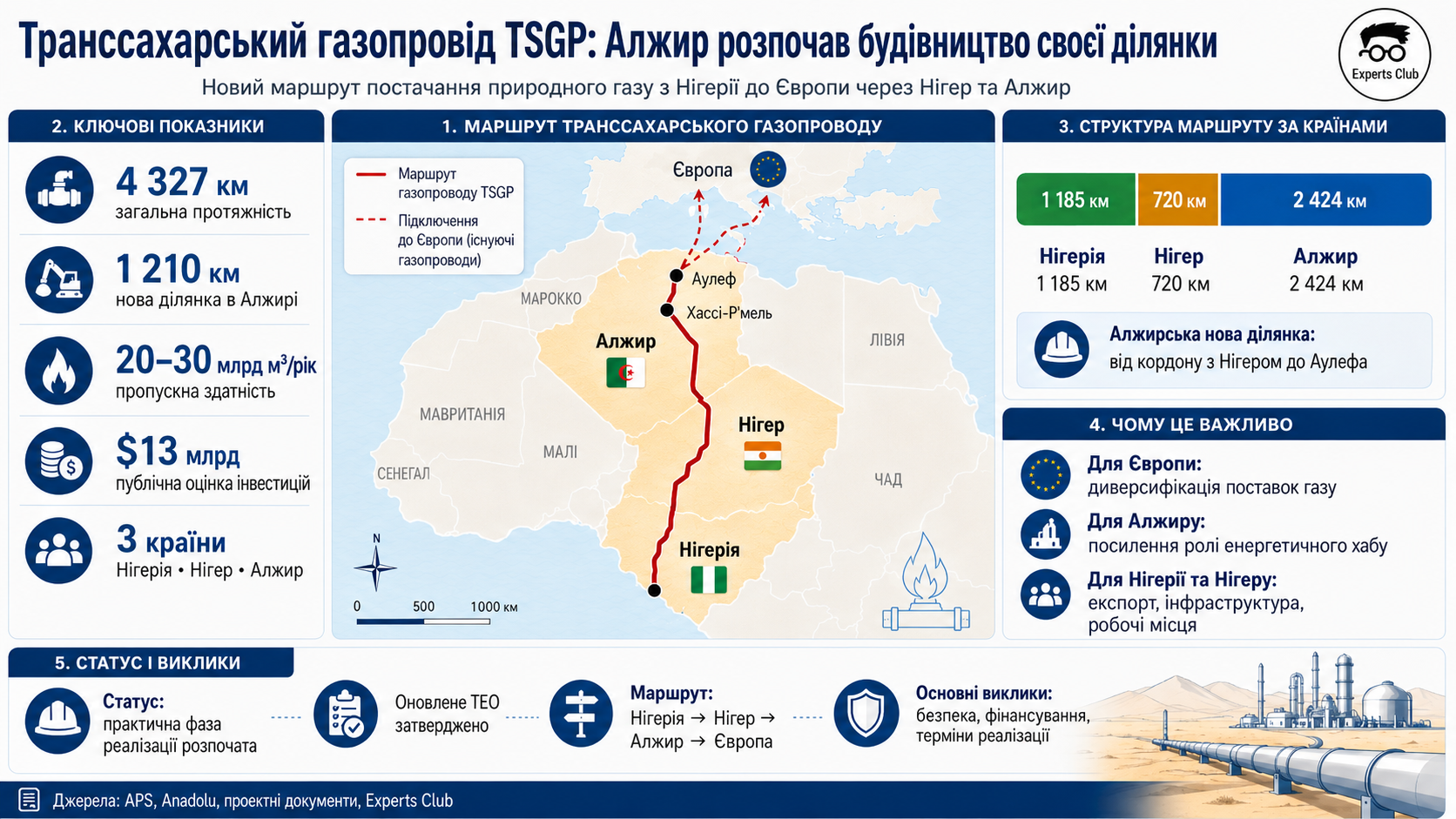
Algeria has officially started the construction of the Algerian section of the Trans-Saharan gas pipeline TSGP, which is supposed to connect Nigeria, Niger and Algeria and provide a new route for the supply of natural gas to Europe and other international markets.
According to the Algerian agency APS, the start of work on the Algerian section marks the transition of the project to the practical implementation phase. The Nigeria-Niger-Algeria gas pipeline should have a length of more than 4,000 km and be considered one of the largest energy infrastructure projects in Africa.
On the eve of the start of construction, the fifth meeting of the project's ministerial steering committee was held in Algeria. As a result of the meeting, the parties approved the final report of the updated technical and economic feasibility study, prepared by the international consulting company Penspen, and agreed on the transition to the next stages of project implementation.
The project involves the transportation of natural gas from Nigeria through the territory of Niger to Algeria. The gas can then enter the existing Algerian gas transportation system and be exported to European and other international markets.
According to Anadolu, citing project documents, the new Algerian section under construction should have a length of about 1,210 km — from the border with Niger to Aulef, where it will be connected to the network leading to the Hassi-Rmel gas hub. From there, gas can be sent to export terminals on the Algerian coast.
The total length of the Trans-Saharan gas pipeline is estimated at approximately 4,327 km. Of them, about 1,185 km should pass through the territory of Nigeria, 720 km through Niger, and the Algerian part, taking into account new and existing sections, is about 2,424 km.
The throughput capacity of the project is indicated in various estimates at the level of more than 20 billion cubic meters of gas per year, and earlier the capacity was also called up to 30 billion cubic meters. Investments in the project in public estimates were previously estimated at approximately $13 billion, but the updated financing parameters may be specified after the approval of the feasibility study and the transition to practical implementation.