Iliana Yotova won the presidential election in Bulgaria with 57.6% of the vote
Incumbent President Iliana Yotova won the presidential election in Bulgaria, receiving 57.57% of the vote in the second round on November 1, 2026. Her victory strengthens the political position of Prime Minister Rumen Radev, whose party, “Progressive Bulgaria,” already holds an absolute majority of seats in parliament. At the same time, the election results have outlined a new configuration of political forces in the country, in which the president and the government are united by a common political course, while the opposition retains significant representation—though not enough to form a majority.
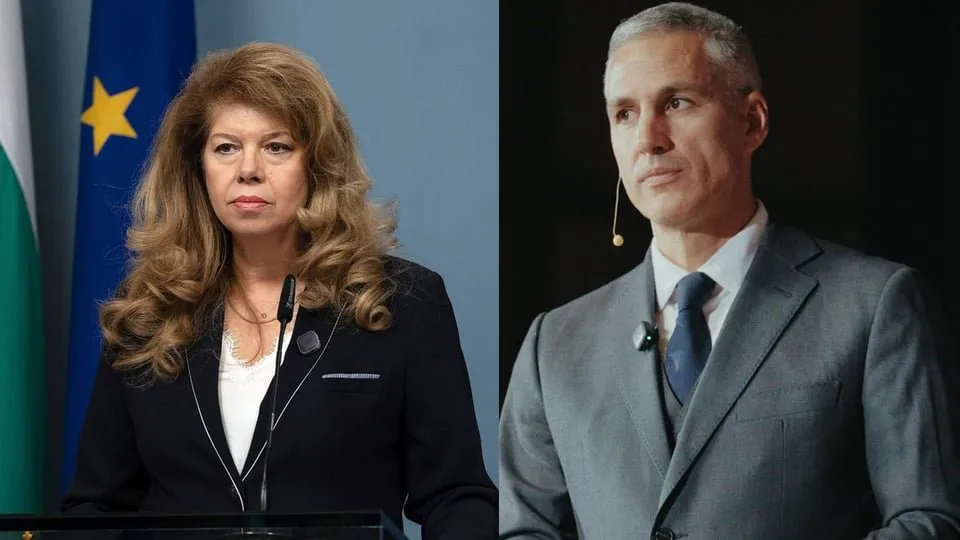
According to data released on November 2 by Bulgaria’s Central Election Commission, after 100% of the polling station protocols had been processed, Yotova and vice-presidential candidate Kiril Vilchev received 1,093,852 votes, or 57.57%. Their rivals, Andrey Gyurov and Georgi Kandev, secured the support of 750,251 voters, or 39.48%. Another 56,080 citizens, or 2.95%, chose the “I do not support anyone” option.
Results of the Two Rounds: From a Close Race to a Decisive Victory
The first round of the presidential election took place on October 25. In that round, Yotova received 34.76% of the vote, while Gyurov received 31.95%. The gap between the two candidates was relatively small, setting the stage for a close second round.
Third place went to Kostadin Kostadinov, leader of the nationalist “Revival” party, who garnered about 12.55%. The remaining candidates trailed far behind the top three.
In the second round, Yotova increased her lead over Gyurov to 18.08 percentage points. In absolute terms, she received approximately 344,000 more votes than her opponent.
At the same time, one of the notable features of the presidential campaign was the low voter turnout. About 23% of voters cast ballots in the first round, and approximately 29% in the second. Thus, the winner received the support of the majority of those who voted, but a significantly smaller share of all registered voters.
Who Is Iliana Yotova?
Iliana Yotova became the first woman elected president of Bulgaria in a nationwide vote. Born in 1964, she previously worked as a journalist, served as a member of the European Parliament, and had been the country’s vice president under Rumen Radev since 2017. In January 2026, she assumed the presidency following Radev’s early resignation, as he decided to run in the parliamentary elections.
Yotova represents a political faction associated with Radev and advocates for maintaining Bulgaria’s European integration while making more active use of diplomatic tools in relations with Russia.
During the election campaign, she called for negotiations to end the war in Ukraine and also advocated for developing dialogue on security issues in the Black Sea region.
Her opponent, Andrey Gyurov, a former deputy head of the Bulgarian National Bank and head of the interim government, represented a more pronounced Euro-Atlantic orientation. He advocated for strengthening cooperation with the EU and NATO, supporting Ukraine, and countering Russian influence.
Balance of Power in Parliament: Radev Retains the Majority
The political situation in Bulgaria changed significantly following the early parliamentary elections on April 19, 2026. The “Progressive Bulgaria” coalition led by former President Rumen Radev won the election, securing 131 of the 240 parliamentary seats.
On May 8, parliament confirmed Radev as prime minister. For the first time in several years, the country has a single-party government with its own parliamentary majority.
As of early November, six parliamentary factions are represented in the 52nd National Assembly.
Radev’s party holds 54.6% of the seats, allowing it to pass most routine legislative decisions without needing to form a coalition.
The largest opposition force remains the center-right GERB–SDS alliance led by former Prime Minister Boyko Borisov, which holds 39 seats.
The pro-European parties “Democratic Bulgaria” and “We Continue the Change,” which ran as a single bloc in the parliamentary elections, hold 21 and 16 seats, respectively. The Movement for Rights and Freedoms holds 21 seats, and the nationalist “Revival” party holds 12.
Thus, the combined representation of the remaining parliamentary forces totals 109 seats. Even if they were to unite, they would not secure a majority without the support of lawmakers from the ruling party.
Yotova’s victory means that the government, the parliamentary majority, and the presidency will now operate under conditions of political alignment among their leaders.
On the one hand, this configuration could simplify the coordination of government decisions and the implementation of reforms. On the other hand, it heightens the importance of an independent judiciary, parliamentary oversight, the opposition, and other checks and balances.
“The results of the presidential election in Bulgaria must be viewed not only through the lens of Iliana Yotova’s personal victory, but also through the lens of voter behavior. With a turnout of less than 30%, a victory with over 57% of the vote demonstrates successful mobilization of supporters, but does not imply automatic support for the political course by the majority of the entire electorate.
The key question for Bulgaria now is whether the new configuration of power will be able to translate political stability into effective governance. Rumen Radev has a parliamentary majority, and the presidency is held by his longtime political ally. This creates favorable institutional conditions for implementing the government’s agenda, but at the same time raises the bar for transparency in decision-making.
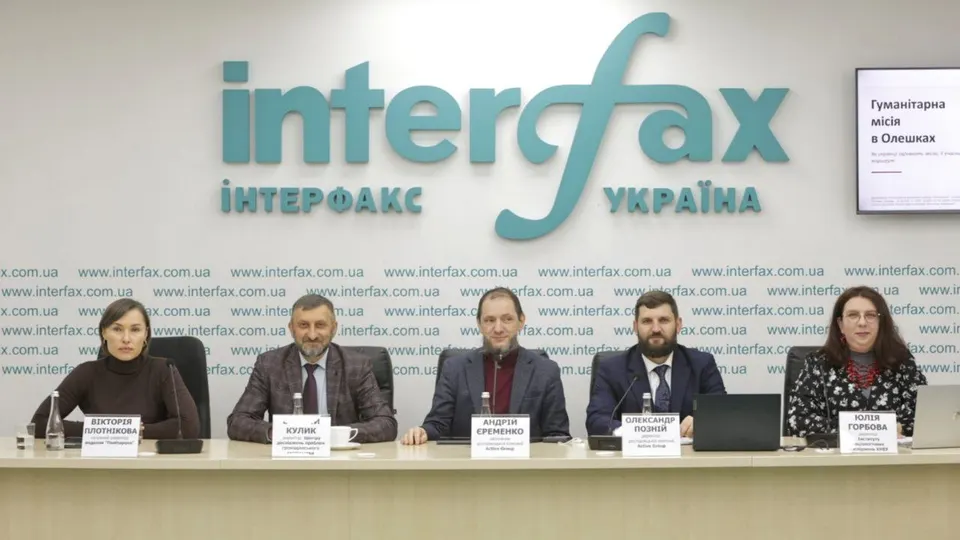
It is particularly important for Ukraine and its European partners to monitor Bulgaria’s practical policies regarding security in the Black Sea region, relations with Russia, and the fulfillment of its obligations within the European Union. “It is these decisions, and not just campaign rhetoric, that will reveal the implications of the current election for the region,” commented Oleksandr Pozniy, a sociologist, director of the polling firm Active Group, and an expert at the Experts Club think tank, on the election results.
What the Election Results Mean for Ukraine and the EU
For Bulgaria’s foreign policy, the presidential election is significant primarily in terms of the political signals it sends and the country’s international representation.
Bulgaria is a member of the European Union and NATO, and will adopt the euro on January 1, 2026. At the same time, Radev’s and Yotova’s positions on certain issues regarding relations with Russia and the war in Ukraine differ markedly from the approaches of European governments, which have taken a tougher stance toward Moscow.
Radev has previously criticized arms deliveries to Ukraine, while Yotova has advocated for opening diplomatic channels with Russia and a negotiated settlement of the war. At the same time, the outcome of the presidential election does not in itself imply a change in Bulgaria’s commitments to the EU and NATO. Major decisions regarding foreign policy, the national budget, the economy, and security are made by the government with the participation of parliament.
For Ukraine, Sofia’s continued participation in European decisions regarding sanctions against Russia, defense cooperation, energy security, and Black Sea security remains a key issue.
In a broader regional context, Bulgaria remains of significant importance for the transportation and energy routes of Southeast Europe. Therefore, the stability of its state institutions and the predictability of its foreign policy course directly affect the interests of neighboring states and European investors.
What Powers Does the President of Bulgaria Have?
Bulgaria is a parliamentary republic, so the president does not manage the day-to-day work of the government and does not independently determine economic policy. According to the country’s Constitution, the head of state is elected by direct vote for a five-year term, with the possibility of one re-election.
The president represents the country in international relations, serves as the supreme commander-in-chief of the armed forces, chairs the National Security Advisory Council, appoints diplomatic representatives upon the government’s recommendation, and participates in the procedures for concluding international treaties as provided by law.
The President’s powers are of particular importance during periods of political crisis. It is the head of state who consults with parliamentary factions, grants mandates to form a government, and, if it is impossible to form a cabinet, appoints an interim government in accordance with the procedure established by the Constitution.
The President also has the right to return laws passed by Parliament for reconsideration. However, the president’s veto is not absolute: members of parliament can override it with a majority of more than half of the People’s Assembly’s established membership—that is, at least 121 votes.
The current “Progressive Bulgaria” party, which holds 131 seats, is theoretically capable of overriding a presidential veto on its own, provided its faction remains united.
Thus, given the current configuration of power, the significance of the presidency will be determined not so much by the ability to block parliamentary decisions as by its role in ensuring national security, shaping the country’s international stance, and maintaining institutional balance.
Prospects for Political Stability
The main difference between the current political situation and that of previous years lies in the existence of a stable majority held by a single political force. Since 2021, Bulgaria has held several early parliamentary elections due to the parties’ inability to form a stable government. The victory of “Progressive Bulgaria” in April 2026 changed this situation, and the outcome of the presidential election further strengthened Radev’s political position.
However, the low voter turnout in the presidential election indicates that a significant portion of voters did not participate in the election. This circumstance raises questions about public trust in political institutions and the prospects for mobilizing the opposition electorate.