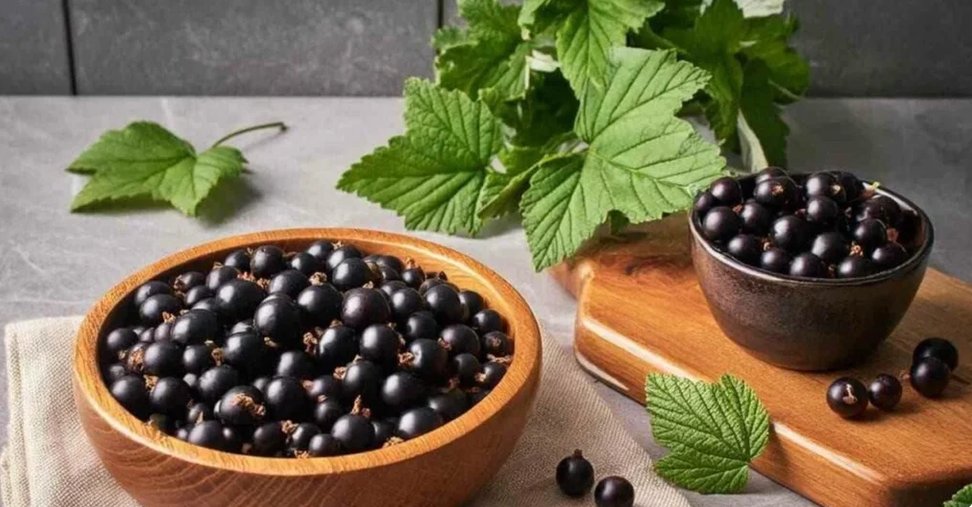
Ukraine remains one of the largest producers of currants in the world and ranks second after Poland, reports EastFruit with reference to the data of specialists of the Institute of Horticulture of the National Academy of Sciences Oleksandr Yareshchenko and Inna Babiichuk.
According to official statistics, the area of currant plantations in Ukraine exceeds 4 thousand hectares, and the annual gross harvest is estimated at approximately 27 thousand tons. At the same time, experts note that these indicators should be evaluated carefully, since about two-thirds of the area belongs to households that are not covered by full statistical reporting.
For the commercial sector, experts consider a more realistic estimate at the level of about 15,000 tons of currants per year. Even with this volume, Ukraine remains one of the key global players and occupies about 8% of the world's area of currant plantations.
The world market of this berry remains quite concentrated. The total area of currant plantations is estimated at approximately 50,000 hectares, with more than 95% located in Europe. Such concentration means a high dependence of the global supply on weather conditions and yields in several major producing countries.
For Ukraine, currants have formed a separate segment of the berry business. This culture is in demand both on the fresh produce market and in processing - for freezing, production of juices, purees, jams and other food products.
Ukraine's high position in the world market also creates export potential, but the development of the industry depends on the modernization of commercial plantations, yield, the availability of cooling and freezing capacities, as well as stable demand from processors.
At the same time, official data do not fully reflect the structure of production, since a significant part of currants is grown by the population for their own consumption and sale on the domestic market.
Source: EastFruit, published on September 15, 2026.